
DLSS 5 on AMD GPUs: Mod Compatibility, Performance, and Limitations

DLSS 5 on AMD GPU Someone got Nvidia’s DLSS 5 running on an AMD graphics card. It works. It’s also barely playable.
In a project titled DLSS-NR-on-AMD, a modder going by the handle danielblnc loads Nvidia’s neural rendering DLL onto RDNA 4 hardware, such as the RX 9070 XT. Cyberpunk 2077 ran at less than 20 frames per second in 1080p on the initial build. A few days later, a patch increased that to 30 frames per second. The hack still has a long way to go before it becomes the parity project that people are referring to, as Nvidia’s own RTX 5070 Ti runs the same workload well beyond that.
The technical accomplishment is genuine. The question of whether DLSS 5 belongs on any GPU at all, whether AMD or not, is also becoming contentious. Days before the mod ever appeared, the RPCS3 emulator team referred to it as a “AI-slop generator.” Now, that dispute is clashing with a modding community that has demonstrated that the technology isn’t actually restricted to Nvidia hardware.
How Did DLSS 5 Run on an AMD RDNA 4 GPU?
Tensor cores are the foundation of DLSS 5. Because RDNA 4 has dual-issue AI accelerators built into the normal computing units rather than Tensor cores, performance suffers when the software is forced to execute somewhere it was never intended to.
Nvidia’s neural network is not reverse-engineered by the mod. After using a wrapper to intercept NGX API requests and mislead the DLSS 5 DLL into believing it is communicating with compatible hardware, it extracts the AI model and executes it on the native HIP compute path of RDNA 4 rather than CUDA or Tensor cores. The impact is verified: insert two files into a game’s bin folder, enable FSR, and DLSS 5 activates. However, as the project is closed-source, modders are free to publish the specific implementation details.
DLSS 5 on AMD GPU With the RX 9070 XT serving as the main test bench, it presently officially supports RX 9000-series (RDNA 4) cards. Although RDNA 3 support is unofficial, it has already been shown on cards such as the RX 7900 XTX. The situation is considerably worse because RDNA 3 does not have native FP8 support and must convert on the fly.
RX 9070 XT Performance: Why Does DLSS 5 Run at Only 30 FPS?
| Test or Feature | Reported Result | What It Means |
|---|---|---|
| Initial DLSS 5 mod test | Under 20 FPS | Early experimental build with very limited performance |
| Earlier patched build | About 30 FPS | Performance improved, but remained demanding |
| Later test reported by Tom’s Hardware | About 50 FPS | Ancient Gameplays tested an Alpha 0.4.0 build at 3440 × 1440; results depend on the exact build and settings |
| Latest project compatibility | RX 9000 and RX 7000 series; RX 6000 support varies by feature | Unofficial mod compatibility is evolving and is not equivalent to native DLSS support |
| Official AMD support | Not officially supported by NVIDIA | The project is community-developed and may have bugs or compatibility issues |
Testing note: These are results reported by third-party sources, not independent tests conducted by Benchmark Setups. FPS figures from different builds, resolutions, and game settings should not be compared as if they came from one controlled test.
In contrast, when playing Cyberpunk 2077 at 1080p on high settings without any upscaling, the RX 9070 XT normally clears 80+ FPS natively. Because the GPU is spending cycles simulating a compute path it wasn’t designed for, running DLSS 5 through the patch is currently a net loss on this card rather than a boost. The DLSS 5 Manager program has since included a “AMD mode” that expands compatibility to cards like the RX 9060 XT, with the same disclaimer that it won’t work in every game. The modder has claimed that RTX 5070 Ti-level performance is the ultimate goal, but there is currently no timescale linked to that.
Why Some Developers Are Criticizing DLSS 5
The RPCS3 team, the creators of the top open-source PlayStation 3 emulator, released a direct denial of DLSS 5 support three days prior to the AMD mod’s release. Their position is that, unlike traditional upscaling, contemporary neural upscalers do not rebuild an image from lower-resolution data. They create additional visual information—such as lighting, material response, and subsurface scattering—that was not present in the initial frame and was not computed by the renderer.
By tweeting that some users had tried a leaked DLSS 5 DLL on their renderer and had “seen the slop it generates,” the RPCS3 team presented this as fabrication rather than improvement. They come to the conclusion that they don’t ship it.
Because emulator engineers dedicate their careers to accurately reproducing original hardware output, that is a noteworthy source to consider. A random forum post is not as credible as a team that is fixated on authenticity labeling DLSS 5 a fiction.
The Other Side: Why Some Developers Support Neural Rendering
According to Nvidia and developers who have openly supported the technology, DLSS 5 is taught to maintain creative intent rather than override it, and early demos overstated the effect because all intensity sliders were maximized. A Warhorse Studios developer explicitly refuted the “AI slop filter” description, and reporters who witnessed NBA 2K27 using the technology at Gamescom allegedly left impressed rather than terrified.
Frame generation and neural rendering allow studios to approach performance as something to fix in post-launch rather than something to optimize for at release, which is the counterargument that has gained traction alongside RPCS3’s position. The motivation to manually adjust rendering pipelines decreases if a game can use AI to provide acceptable frame rates. This version of the complaint focuses on what upscaling allows developers to avoid rather than image quality per se.
Is DLSS 5 on AMD GPUs Actually Usable for Gaming?
Before anyone purchases an RX 9070 XT expecting a DLSS 5 experience right out of the box, it’s important to be aware that this mod does not currently provide feature parity with Nvidia.
Community-developed projects have demonstrated DLSS 5 Neural Rendering on selected AMD Radeon GPUs, but this does not mean the feature is officially supported or performs like it does on compatible NVIDIA hardware. Performance depends on the GPU, mod version, game, and settings. These experiments show that cross-vendor compatibility may be possible, but further optimization and broader testing are needed before the mod can be considered a practical option for everyday gaming.
Be cautious if you’re an AMD customer hoping that this would actually be a feature. Closing the remaining gap to RTX 5070 Ti-level performance requires either significantly more efficient code or AMD introducing dedicated AI circuitry in a future design, but going from 20 to 30 FPS in a few patches is a quick improvement rate for a hobby project. Neither is near.
What This Experiment Means for the Future of GPU Rendering
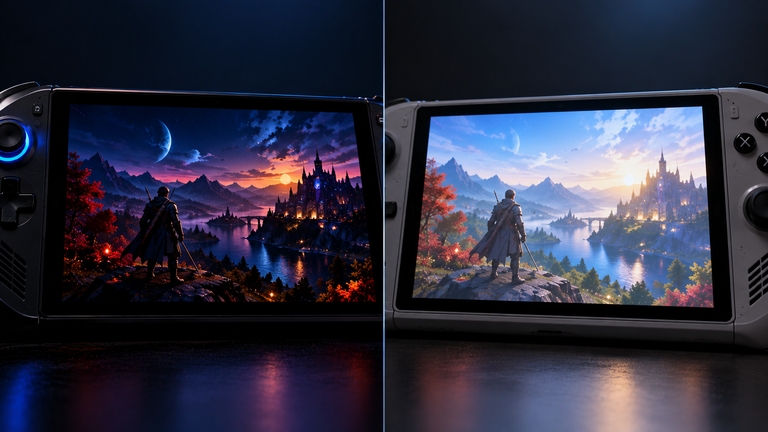
Apart from the DLSS 5 dispute, the mod itself merits praise. It is an extremely difficult reverse-engineering problem to get Nvidia’s proprietary neural rendering DLL to run on a completely different vendor’s compute architecture without source access to the model, and doing so within days of the technology’s public launch speaks more about the skill of the modding community than it does about the benefits of DLSS 5.
On its own terms, the RPCS3 critique is also worth considering. “AI slop” is a crude but accurate description of what happens when a neural network creates illumination data that was never rendered, and there is a real, testable difference between reconstructing and generating an image. Whether or if you value frame rate or visual fidelity more will determine whether or not that is an issue; this is a personal preference rather than a truth.
The optimization question is the real unanswered question. What “well-optimized” even means in the future will alter if neural rendering becomes the standard method used by studios to achieve performance goals. This is a more significant discussion than a tweet from an emulator team or an AMD hack.
In your opinion, is neural rendering a valid rendering method or just a way to avoid the labor-intensive tasks that AAA studios once performed? Leave a comment with your thoughts.
Frequently Asked Questions
Can DLSS 5 run on AMD GPUs?
Yes, community-developed projects have demonstrated DLSS 5 Neural Rendering on selected AMD Radeon GPUs. This requires unofficial software and may not work with every game or hardware configuration.
Does DLSS 5 work on the RX 9070 XT?
The Radeon RX 9070 XT has been used to illustrate the experimental DLSS-NR-on-AMD hack. According to recent sources, Cyberpunk 2077 can run at about 30 frames per second in 1080p, depending on the mod version and test configuration.
Is DLSS 5 officially supported on AMD Radeon GPUs?
No. NVIDIA’s official DLSS hardware support applies to supported GeForce RTX GPUs. AMD compatibility through community mods is unofficial and may involve performance, stability, or anti-cheat limitations.
Why is DLSS 5 slow on AMD GPUs?
The present AMD implementation of DLSS 5 Neural Rendering is an unofficial experimental translation layer rather than native support, and it is computationally intensive. Optimization of the mod is still ongoing.
Can AMD users replace FSR with DLSS 5?
Not practically for regular gaming just yet. Although the hack shows that DLSS 5 can theoretically function on AMD hardware, it is mostly a technical experiment due to performance and compatibility issues.
Will DLSS 5 officially come to AMD GPUs?
As of right now, there is no sign that Nvidia intends to formally enable DLSS 5 on AMD Radeon GPUs. Future compatibility is still up in the air.
Useful Tools
Vertical Stack Ceiling Clearance Calculator | Monitor Stack Height Tool
Under-Desk Mount Torque Calculator | PC Mount Load Checker
Desk Boundary Bass Gain Estimator | Speaker Boominess Calculator
Speaker Placement Calculator | Near-Field Toe-In Angle Tool
Keyboard Footprint Savings Calculator | 60% vs TKL vs Full-Size
Mousepad Size Calculator | DPI & Sensitivity Fit Checker


11 Comments