Cloud Gaming in 2026: Is It Finally Ready to Replace Your Gaming PC?
Cloud Gaming 2026, A few years ago, cloud gaming felt like a promising idea that never quite delivered. Early services were plagued by stuttering video, noticeable input delay, and streaming quality that made competitive games nearly unplayable. A lot of people tried it once, shrugged, and went back to their consoles or desktops without looking back. That reputation has been hard to shake off, but the technology behind cloud gaming has changed dramatically since then, and the conversation around it has shifted just as much. Subscriber numbers are climbing into the tens of millions, infrastructure providers are refreshing their server hardware on aggressive cycles, and for the first time, a genuine question is being asked seriously by everyday gamers rather than just tech enthusiasts. Can cloud gaming actually replace a physical gaming PC in 2026, or is it still a convenient extra rather than a real substitute?
This guide breaks down what has actually changed, where cloud gaming genuinely competes with local hardware, and where it still falls short, so you can decide for yourself without relying on marketing promises from either side.
What cloud gaming actually is, in plain terms
Cloud gaming works by running the game on a powerful remote server, usually housed in a large data center, rather than on the device sitting in front of you. That server renders every frame of the game, compresses the video, and streams it to your screen over the internet in something close to real time. Your inputs, whether from a keyboard, mouse, or controller, travel back to the server the same way, telling it what to do next. From your perspective, it looks and feels like the game is running locally, but the actual computing power doing all the heavy lifting lives somewhere else entirely, often hundreds of miles away.
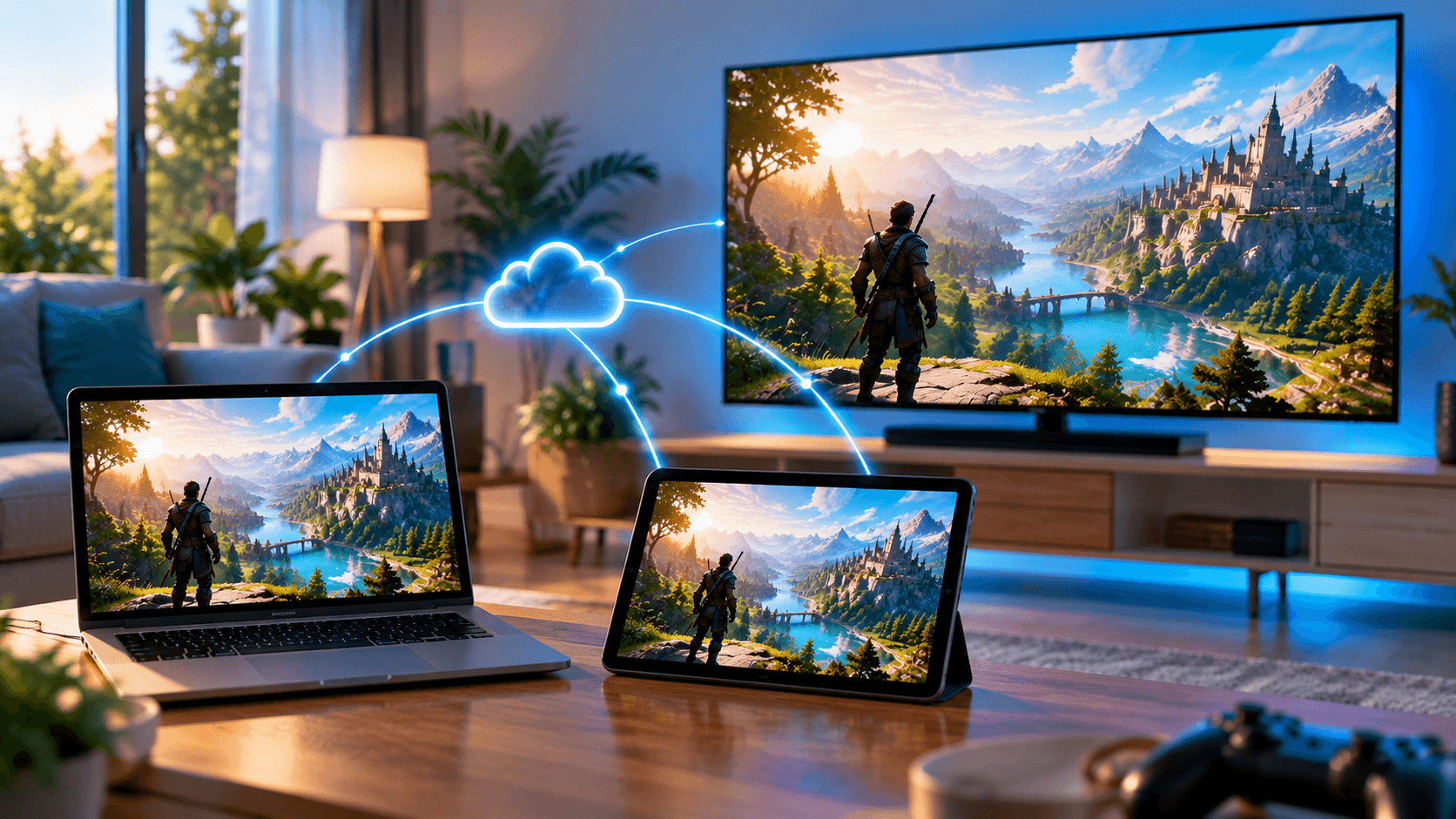
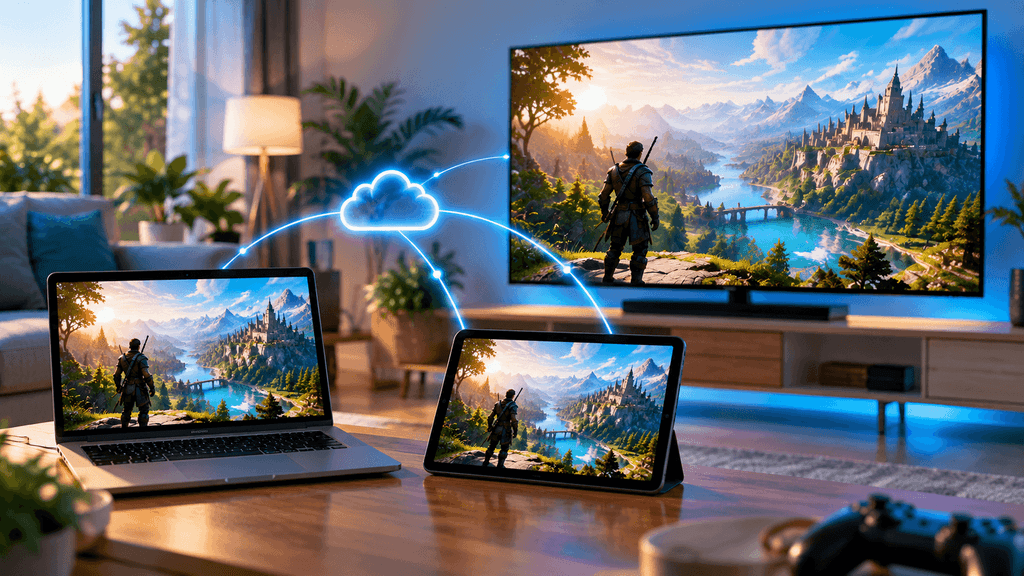
This means the device you are playing on barely matters in terms of raw power. A modest laptop, an old computer that could never run a modern game on its own, a tablet, or even certain smart TVs can technically display a graphically demanding game at a level that would normally require an expensive graphics card sitting right in front of you.
Why the experience has genuinely improved
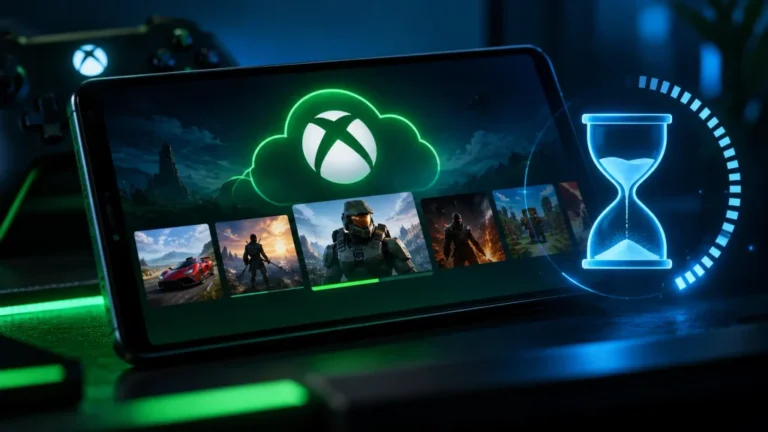
The biggest complaint about early cloud gaming was always latency, the delay between pressing a button and seeing that action happen on screen. That delay comes from several places at once: the trip your input takes to the server, the time the server takes to process and render the next frame, the time it takes to compress and stream that frame back to you, and the final decoding and display on your own device. Every one of those steps has improved.
Data centers have moved physically closer to major population centers, cutting down the raw travel time your data needs to make in each direction. Compression technology has also advanced significantly, allowing more visual detail to be squeezed into a smaller amount of data without looking blocky or blurry, which matters because less data generally means less time spent transmitting it. On top of that, providers have refreshed their server side hardware on much faster cycles than console generations traditionally allow, meaning the actual rendering power behind a cloud gaming session today can rival or exceed what a dedicated high end gaming PC offers locally.
The result is that, under good conditions, modern cloud gaming can deliver high resolution, high frame rate gameplay with latency low enough that many players genuinely cannot distinguish it from local hardware in casual play. That is a meaningful shift from where the technology stood just a few years ago.
The catch nobody can engineer away: your own internet connection
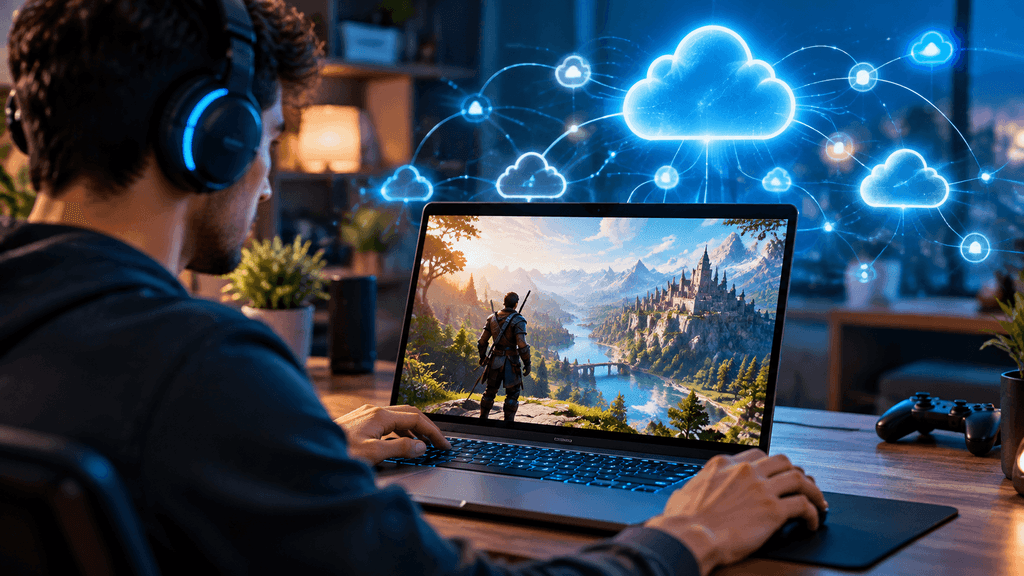
Here is the part that server upgrades and compression improvements cannot fully solve. No matter how good the infrastructure behind a cloud gaming service becomes, your experience is still capped by the quality of your own internet connection. A wired fiber connection with low latency and strong, stable bandwidth can deliver an excellent experience. A shared, congested home network, an older router, or a connection with inconsistent performance during peak hours can undo all of that infrastructure investment instantly, turning a smooth session into a stuttering, frustrating one.
This is why cloud gaming performance varies so much from person to person, even when using the exact same service. Two people describing wildly different experiences with the same platform are very often just describing two very different internet connections, not two different products.
Before judging cloud gaming based on someone else’s experience, or even your own from a few years ago, it is worth actually testing your specific connection under real conditions, ideally with a wired connection rather than relying on WiFi, which introduces its own additional variability.
Where cloud gaming genuinely competes with owning hardware
For certain situations, cloud gaming is not just a backup option anymore. It is a legitimately strong choice.
Access to expensive hardware without buying it. Top tier graphics performance, the kind that would normally require an expensive physical graphics card that has also become harder to find and more expensive due to ongoing component shortages, becomes available through a monthly subscription instead of a large upfront purchase. For someone who wants high end visuals without committing thousands of dollars to a build, this is a genuinely compelling trade.
Playing across multiple devices without owning multiple gaming rigs. Since the actual computing happens remotely, you can pick up roughly the same experience on a laptop at home, a different computer at work during a break, or even certain tablets and TVs, all through the same account, without needing powerful hardware in each location.
Avoiding hardware that becomes outdated. Traditional gaming PCs slowly fall behind as new games demand more from graphics cards and processors, eventually requiring an upgrade to keep up. Cloud gaming services handle that hardware refresh on their end, so the burden of staying current shifts away from the individual player.
A lower cost entry point for casual or occasional players. If you only play seriously a few times a month, a subscription can be significantly cheaper over time than the upfront cost of a capable gaming PC, especially during a period when component prices remain elevated.
Where local hardware still clearly wins
Despite the real improvements, cloud gaming has not eliminated every downside, and some of these are unlikely to disappear even with further infrastructure investment.
Competitive and fast paced games are still a risk. Even with excellent infrastructure, cloud gaming adds at least some additional delay compared to processing everything locally, simply because of the physical realities of sending data back and forth. For casual or story focused games, this is rarely noticeable. For competitive shooters or rhythm sensitive games where split second timing matters, that small additional delay can be the difference between a clean play and a frustrating miss, and serious competitive players still overwhelmingly prefer local hardware for this reason.
You do not actually own anything tangible. A physical gaming PC is yours. You can upgrade individual parts, sell it later, or use it exactly how you want indefinitely. A cloud gaming subscription depends entirely on a service continuing to operate, continuing to support the games you care about, and continuing to offer terms you are comfortable with. If a service changes its library, adjusts pricing, or shuts down, your access changes along with it, in a way that owning hardware never exposes you to.
Bandwidth caps and data usage add up. Streaming high quality video for hours at a time consumes a genuinely large amount of data. For anyone on a limited or capped home internet plan, extended cloud gaming sessions can become an unexpectedly expensive habit, something that rarely comes up in marketing materials.
Not every game or feature is available. Game libraries vary by service and change over time based on licensing agreements. A specific game you want to play, a particular mod you rely on, or certain technical features available on local hardware may simply not be supported through a given cloud platform.
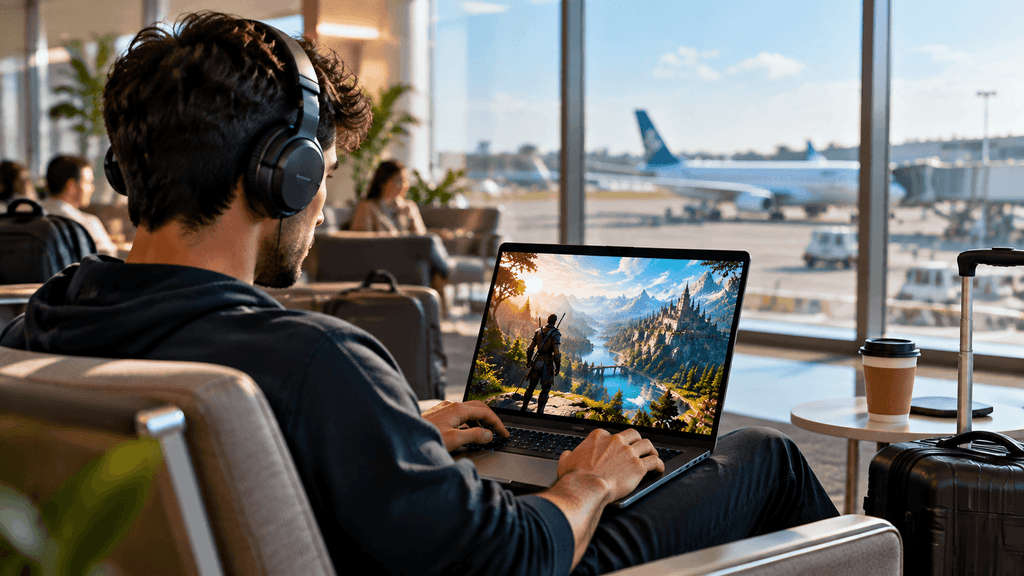
Traveling or unreliable internet environments break the experience entirely. Airports, rural areas, certain hotels, and anywhere with inconsistent or capped internet access can make cloud gaming unusable in situations where a fully local gaming laptop would work exactly the same regardless of the connection available.
A realistic look at the cost comparison
Cloud gaming subscriptions are often framed as dramatically cheaper than buying hardware, and in the short term, that is often true. A monthly subscription is a small, predictable cost compared to the significant upfront price of a capable gaming PC or graphics card, especially with current component prices elevated by ongoing supply constraints.
But the comparison changes over a longer time horizon. A subscription is a recurring cost with no end date and no residual value. A physical gaming PC, once purchased, continues to provide value for years without additional monthly payments, and individual components retain some resale value even after you eventually upgrade. For someone who plays heavily and consistently over several years, owning hardware can end up being the more cost effective choice in the long run, even accounting for eventual upgrades. For someone who plays occasionally, travels often, or specifically wants access to expensive top tier performance without a large upfront cost, the subscription model can remain the better financial choice indefinitely.
There is no single right answer here. It genuinely depends on how much and how consistently you play, and how much you personally value ownership versus flexibility.
The hybrid approach more people are actually landing on
Rather than treating this as an all or nothing decision, a growing number of players are using cloud gaming and local hardware together, each for what it does best. A capable but not top tier gaming PC handles daily play, competitive titles, and anything latency sensitive, while a cloud gaming subscription fills in the gaps, offering access to occasional graphically demanding titles the local hardware cannot comfortably run, or providing a way to keep playing while traveling or away from the main setup.
This approach avoids the single biggest weakness of relying entirely on cloud gaming, which is total dependence on a stable internet connection and a continued service, while still capturing much of its convenience and flexibility. It is a pragmatic middle ground that has become genuinely popular precisely because it does not ask you to fully commit to either side of the debate.
What this means for the broader PC hardware market
The growth of cloud gaming is also starting to influence the traditional hardware market itself, not just individual buying decisions. As more casual and moderately serious players shift some or all of their gaming to cloud services, demand pressure on mid range consumer graphics cards may soften somewhat over time, even as demand for server grade hardware used to power these same cloud platforms increases sharply. This is part of a broader pattern where computing power is increasingly concentrated in large data centers rather than distributed across individual consumer devices, a trend playing out across several areas of technology right now, not just gaming specifically.
For hardware enthusiasts and PC builders, this does not mean local gaming PCs are going away. Building, customizing, and owning a personal gaming rig remains a genuine hobby and a preferred experience for a large and passionate group of players who value control, ownership, and the absence of any dependency on an internet connection or a company’s continued support. But it does mean the PC hardware conversation increasingly has to account for cloud gaming as a real alternative sitting alongside it, rather than dismissing it as a niche experiment the way it might have been a few years ago.
How to actually test if cloud gaming works for you
Before committing to a subscription as a real replacement for local hardware, or dismissing it outright based on an old impression, it is worth testing it properly under your own real conditions. Use a wired connection rather than WiFi if at all possible, since wireless connections introduce additional variability that can make a genuinely capable service feel worse than it actually is. Test during the times of day you would actually want to play, since shared household internet usage during peak evening hours can meaningfully affect performance compared to a quiet test run during the day. Try the specific types of games you care about most, since a service that feels flawless in a slower paced game may reveal its limitations quickly in something fast paced and competitive. Most services offer some kind of trial period or short term subscription option specifically so players can test real world performance before committing to anything longer term, and taking advantage of that is far more useful than relying on anyone else’s opinion, including this article.
The bottom line on cloud gaming in 2026
Cloud gaming has moved from a rough, unreliable experiment into a genuinely capable option for a meaningful portion of players, and the improvements behind that shift are real rather than just marketing. It has not eliminated the fundamental tradeoffs, though. Your own internet connection still sets a hard ceiling on the experience, competitive and latency sensitive play still generally favors local hardware, and the recurring cost model suits some play patterns far better than others.
The honest answer is that cloud gaming is not a universal replacement for a gaming PC, and it was never going to be one overnight. But for casual players, people without the budget or desire for expensive hardware, anyone wanting access to top tier performance without a large upfront cost, or players who simply want more flexibility across devices, it has genuinely become a legitimate primary option rather than just a backup plan. The smartest approach for most people is not picking a side permanently, but testing it honestly against your own internet connection and your own play style, and deciding from there.
Have you tried cloud gaming recently, and did it actually hold up for the games you care about? Let us know in the comments.
FAQ: Cloud Gaming in 2026
Is cloud gaming actually good enough to replace a gaming PC now?
For casual and moderately serious players with a strong, stable internet connection, cloud gaming can genuinely replace local hardware for most games. Competitive and latency sensitive players still generally get a better experience from local hardware.
How much internet speed do I need for good cloud gaming?
Requirements vary by service and target quality, but a stable connection with low latency matters more than raw download speed alone. A wired connection is strongly recommended over WiFi for the most consistent experience.
Is cloud gaming cheaper than buying a gaming PC?
In the short term, yes, since a subscription avoids a large upfront cost. Over a longer period of heavy, consistent play, owning hardware can become more cost effective, since a subscription has no end date and no resale value.
Does cloud gaming work well for competitive games?
It can work, but even with excellent infrastructure, some additional delay compared to fully local processing is unavoidable. For games where split second timing matters most, many competitive players still prefer local hardware.
Can I use cloud gaming while traveling?
Yes, as long as you have access to a stable, sufficiently fast internet connection. Unreliable or capped internet environments, such as certain hotels or public networks, can make cloud gaming difficult or unusable.
Do cloud gaming services use a lot of data?
Yes, streaming high quality video for extended sessions consumes a significant amount of data. This is worth checking carefully if you have a limited or capped home internet plan.
Can I use cloud gaming and a gaming PC together?
Yes, and this hybrid approach has become increasingly popular. Many players use local hardware for daily and competitive play while using a cloud gaming subscription for occasional access to more demanding titles or for playing while away from their main setup.
More Useful Tools
Vertical Stack Ceiling Clearance Calculator | Monitor Stack Height Tool
Under-Desk Mount Torque Calculator | PC Mount Load Checker
Desk Boundary Bass Gain Estimator | Speaker Boominess Calculator