
AI-Native vs Repairable Laptops: What Should You Buy in 2026?
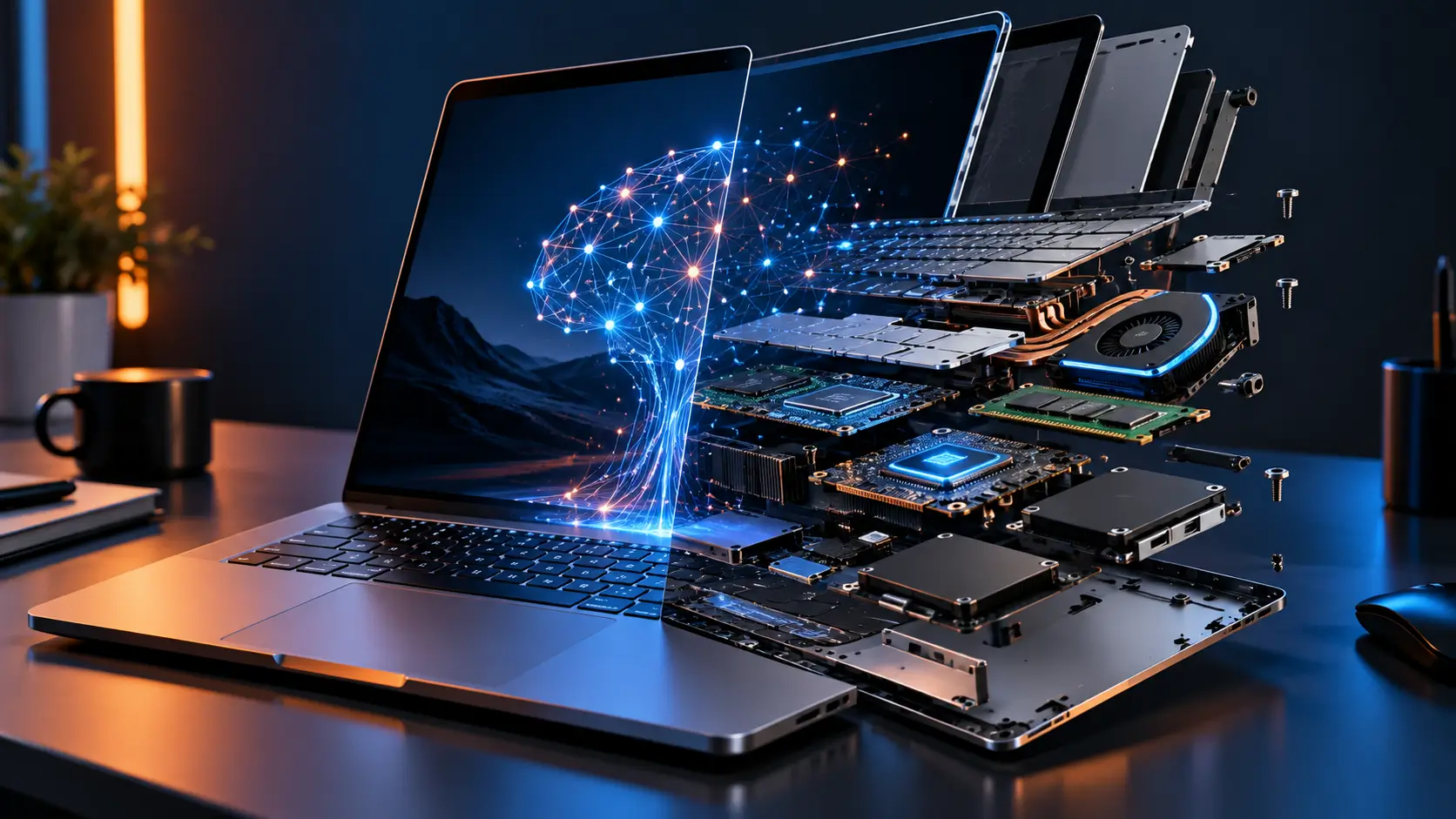
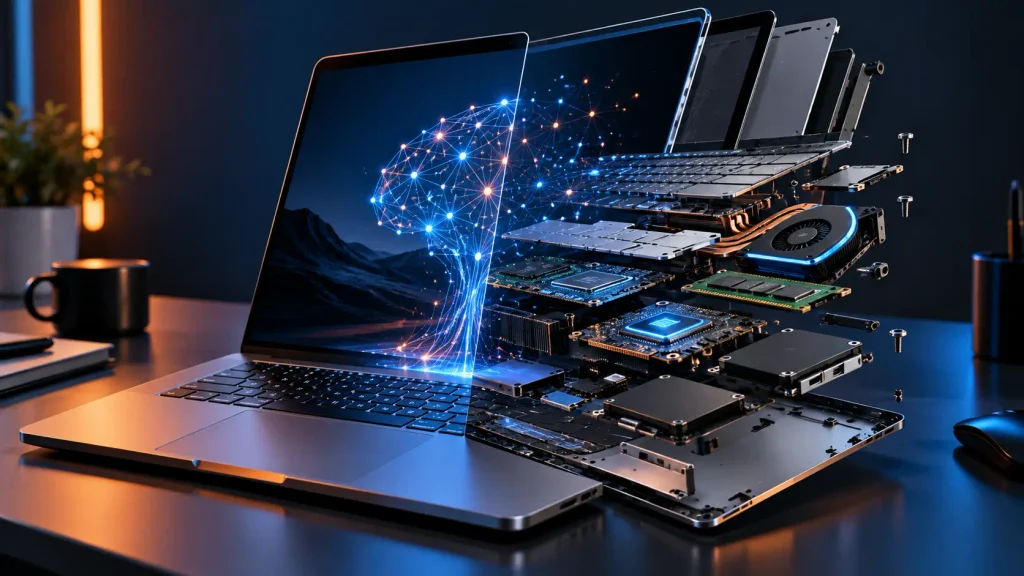
AI-Native vs Repairable Laptops: This year, two unexpected developments about laptops occurred at the same time. With 40+ TOPS NPUs now standard on almost every 2026 flagship, local AI processing has evolved from a marketing sticker to a hardware baseline. And after ten years of laptops becoming more and more sealed shut with each iteration, repairability changed so drastically that Lenovo completely redesigned the ThinkPad X1 Carbon’s internal structure to receive a 9/10 iFixit score.
AI-Native vs Repairable Laptops: These trends are not unconnected. They are two perspectives on the same trend. It is only worthwhile to purchase an AI-native laptop if it will remain functional long enough for the AI software ecosystem to catch up to the silicon. This means that you will be able to replace the machine in three years with a new battery and additional RAM rather than buying a new one.
With a July 31, 2026 compliance date requiring seven to ten years of maintenance service and parts availability, the EU’s right-to-repair directive offered manufacturers a compelling reason to be concerned. If you want a laptop that is both AI-capable and still worth owning in 2030, here’s what has really changed and what to consider.
What Are AI-Native Laptops and What Does 40+ TOPS Mean?
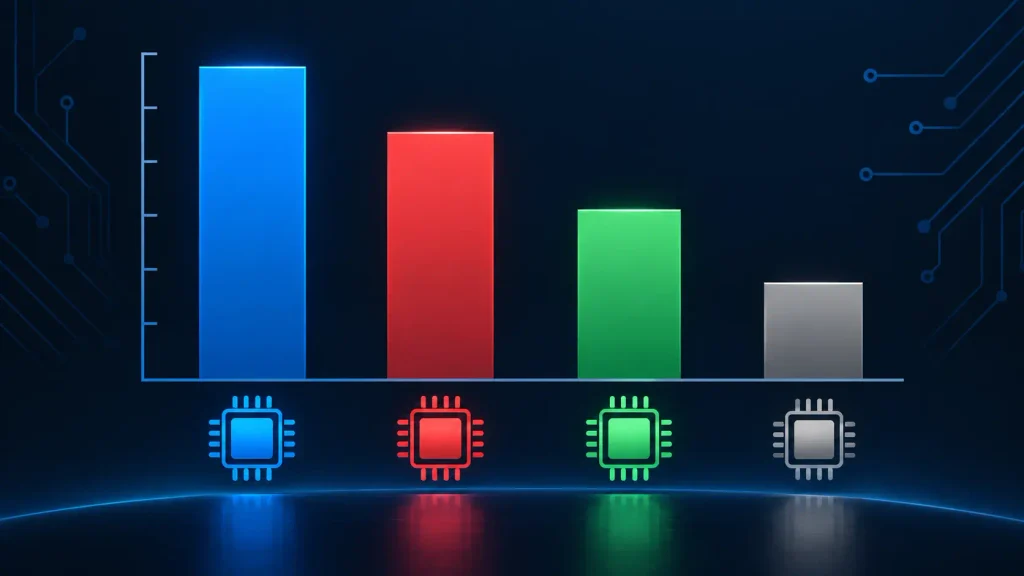
AI-Native vs Repairable Laptops: The 40 TOPS threshold is Microsoft’s requirement for Copilot+ PC certification, which unlocks Windows Recall, live captions, and AI image editing. Every current-generation part clears that bar, which means the number itself has stopped being a useful differentiator between machines.
The top end is where the spread is most noticeable. On the highest SKUs, Qualcomm’s Snapdragon X2 Elite max out at about 80 max. In the Ryzen AI 400 series, AMD’s Ryzen AI 9 HX 475 achieves 60 TOPS. For top-tier Core Ultra X9/X7 components, Intel’s Panther Lake Core Ultra Series 3 only slightly increases the NPU itself, from about 48 TOPS on NPU 4 to about 50 TOPS on NPU 5. However, it claims that total platform AI performance approaches 180 TOPS if the Xe3 GPU is taken into account. These Intel platform numbers are not independent test results; rather, they are the company’s own figures.
Why NPU TOPS Alone Does Not Determine AI Laptop Performance
AI-Native vs Repairable Laptops: You can learn very little about real-world AI performance from the raw NPU ranking. More important than the headline figure are memory bandwidth, sustained NPU power under thermal load, and if your particular software truly targets the NPU.
The greater practical gap is in developer tooling. The most developed ecosystem is Intel’s OpenVINO, especially for tiny LLMs and computer vision models. The deployment of the Hugging Face model is now simple thanks to AMD’s Ryzen AI software’s native support for PyTorch and TensorFlow. Although Windows DirectML is compatible with all three suppliers, its universality comes at the expense of peak optimization.
AI-Native vs Repairable Laptops: If you’re running large local models rather than Copilot features, unified memory capacity is the real constraint. Apple’s M5 Max supports 128GB of unified memory with the highest published bandwidth of any laptop part, and Qualcomm’s X2 Elite Extreme now also reaches 128GB, which makes Windows-on-Arm genuinely viable for local LLM work for the first time.
Why Repairable and Modular Laptops Are Becoming More Important in 2026
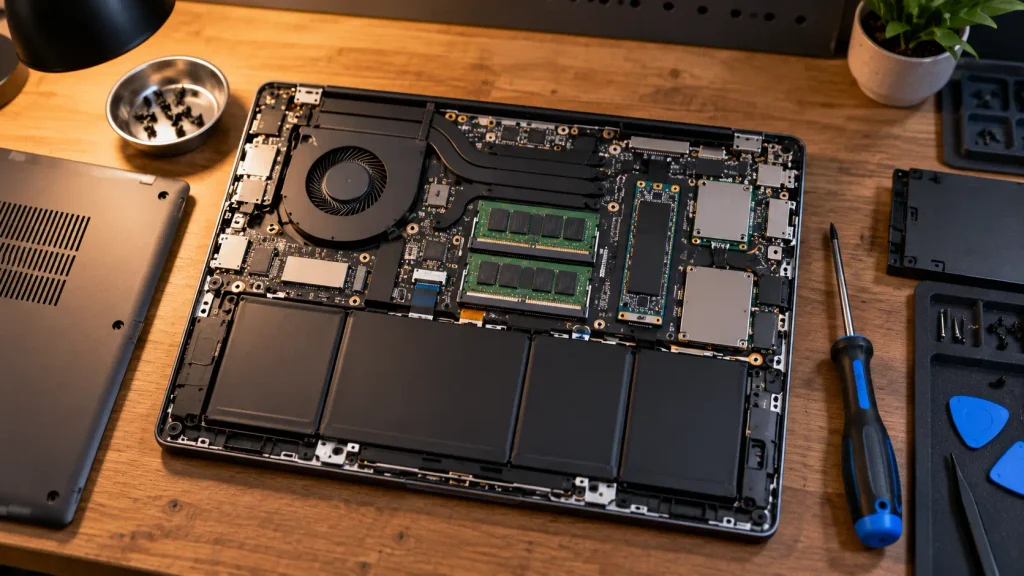
AI-Native vs Repairable Laptops: Framework, which shipped completely modular 12-, 13-, and 16-inch laptops with 10/10 iFixit scores and a marketplace selling first-party parts down to the mainboard, served as the proof of concept for the right-to-repair campaign for five years. You can hot-swap side ports without using any tools thanks to the Expansion Card system.
The mainstream brands began imitating it around 2026. The ThinkPad X1 Carbon Gen 14 Aura Edition, which Lenovo unveiled at CES 2026, has a “Space Frame” chassis constructed around a two-sided motherboard that is about two-thirds the size of its predecessor. This allows for the replacement of the battery, keyboard, speakers, fans, and USB-C ports separately and frees up thermal space. In an ultrabook category that had been heading toward 4s and 5s, it received a 9/10 iFixit rating.
AI-Native vs Repairable Laptops: The industry’s also standardizing on LPCAMM2 for user-replaceable high-speed memory, which closes the gap that forced manufacturers to choose between soldered RAM performance and upgradeability.
Which Laptop Brands Offer the Best Repairability in 2026?
AI-Native vs Repairable Laptops: The gap between brands is now wide enough to matter at purchase time. Framework Laptop 13 and 16 both sit at 10/10. Lenovo ThinkPad business models and Dell Latitude follow closely by keeping socketed components. Apple’s MacBook Neo scores a 6, with modular USB-C ports offset by proprietary pentalobe screws and soldered RAM and storage. Samsung and ASUS consumer lines score poorly because nearly everything is soldered or glued.
Dell’s case is the odd one. The Latitude E5270 scored a perfect 10 back in 2017, while current Latitude models estimate at 7-8. The capability exists; it just hasn’t been prioritized since.
Are Repairable Laptops Cheaper Over Five Years?
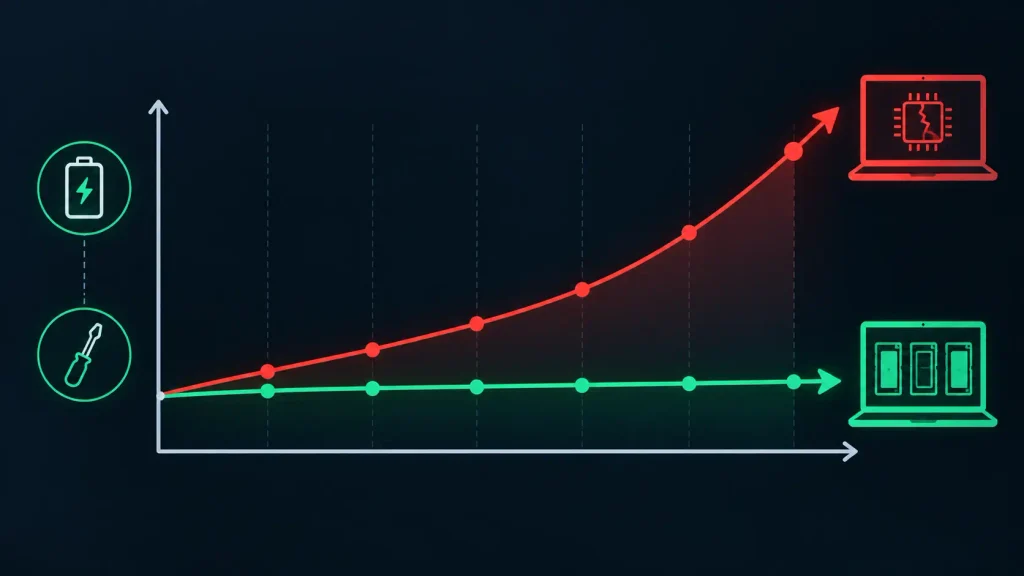
AI-Native vs Repairable Laptops: The upfront premium on modular laptops is real, but the five-year math usually favors them. A battery that degrades to 70% at year three is a $60 part and a screwdriver on a Framework, versus a service depot visit or a full replacement on a bonded chassis.
Resale holds the difference too. Framework laptops reportedly resell at 60-70% of original value after three years, compared to 40-50% for comparable soldered ultrabooks. Extending a laptop’s lifespan through repair also cuts its annual climate impact by up to 44%, if that factors into your decision. See the step-by-step visual breakdown on Pinterest
Best AI-Native and Repairable Laptops to Consider in 2026
| Model | NPU | Repairability | Key strength | Approx. price |
|---|---|---|---|---|
| Framework Laptop 13 (Ryzen AI 7 350) | 50 TOPS (XDNA 2) | 10/10 | Fully modular, every part user-replaceable | ~$1,149 |
| Framework Laptop 13 Pro (Core Ultra X7 358H) | ~50 TOPS (NPU 5) | 10/10 | Arc B390 graphics, 2.8K touchscreen | Configurable |
| Lenovo ThinkPad X1 Carbon Gen 14 Aura | 40+ TOPS | 9/10 | Space Frame chassis, ultrabook form factor | Premium tier |
| ASUS Zenbook Duo 2026 (Core Ultra X9 388H) | ~50 TOPS | Low | Dual-screen, strong OpenVINO performance | Premium tier |
| Apple MacBook Air M5 | Neural Engine (mature) | ~6/10 | Best-integrated AI software stack on macOS | Mid-premium |
| Apple MacBook Pro M5 Max | Neural Engine | ~6/10 | 128GB unified memory for frontier local models | High-end |
| Acer Swift Go 14 AI (Lunar Lake) | 48 TOPS | Moderate | Best sub-$1,000 Copilot+ pick, 1.25kg | ~$899 |
AI-Native vs Repairable Laptops: The Zenbook Duo 2026 is worth calling out on the AI side specifically: running the UL Procyon AI Image Generation benchmark locally through Intel’s OpenVINO runtime, it cleared a score of 601 without any discrete GPU. That’s a meaningful data point for what Panther Lake’s integrated stack can actually do.
Which AI and Repairable Laptop Should You Buy in 2026?
Buy for repairability first, NPU second. Every 2026 laptop clears 40 TOPS. Very few clear 9/10 on repairability. The scarce resource is the one to optimize for.
AI-Native vs Repairable Laptops: If you want maximum longevity: Framework Laptop 13 or 16. Nothing else lets you swap a mainboard to a newer CPU generation without buying a new chassis, and that’s the single feature that most extends useful life on an AI machine.
If you want a mainstream ultrabook that’s still fixable: ThinkPad X1 Carbon Gen 14 Aura Edition. The Space Frame redesign delivers 90% of Framework’s serviceability in a chassis that’s thinner and more rigid.
If you run large local models: Apple M5 Max or Snapdragon X2 Elite Extreme, both at 128GB unified memory. You’re trading repairability for capability here, and that’s a defensible trade if local inference is your actual workload.
AI-Native vs Repairable Laptops: If budget caps at $1,000: Acer Swift Go 14 AI. You get full Copilot+ capability at 48 TOPS without paying the modular premium, accepting that it’s a three-to-four year machine rather than a seven-year one.
AI-Native vs Repairable Laptops: Check the exact model year’s iFixit score before buying. Scores change when manufacturers redesign internals or switch adhesives, so last generation’s rating tells you nothing about the unit on the shelf.
Frequently Asked Questions About AI-Native and Repairable Laptops
What is an AI-native laptop?
An AI-native laptop is a computer with dedicated hardware, such as an NPU, designed to accelerate local AI tasks including voice processing, image generation, productivity features and machine-learning workloads.
Are repairable laptops good for AI workloads?
They can be, but repairability and AI performance are separate factors. Check the processor, NPU performance, RAM capacity, cooling system and software compatibility before buying.
What is the best repairable laptop in 2026?
Framework laptops are among the strongest options for modularity and user repairability. However, the best choice depends on your budget, processor requirements, operating system and availability in your region.
Is 40 TOPS enough for an AI laptop?
40 TOPS is an important Copilot+ PC threshold, but it does not guarantee the same real-world performance across all laptops. Memory, cooling, software optimization and workload type also matter.
Can laptop RAM be upgraded in 2026?
Some laptops still offer replaceable RAM or LPCAMM2 memory, while many thin-and-light models use soldered memory. Always check the exact model configuration before purchasing.
Are repairable laptops worth buying?
They can offer better long-term value because components such as batteries, storage, keyboards and ports may be replaceable. However, the initial price and availability of spare parts should also be considered.
What matters more: NPU TOPS or repairability?
For most buyers, the answer depends on their workload. AI developers may prioritize NPU performance and memory, while students, professionals and long-term users may benefit more from repairability and upgradeability.
Clilck below link for more guide
Laptop buying guide
Laptop processor comparison
Laptop repairability or teardown article
More Useful Tools
Vertical Stack Ceiling Clearance Calculator | Monitor Stack Height Tool
Under-Desk Mount Torque Calculator | PC Mount Load Checker
Desk Boundary Bass Gain Estimator | Speaker Boominess Calculator

9 Comments