PS5 vs Xbox Series X HDMI 2.1 Bandwidth: 32Gbps vs 40Gbps Explained
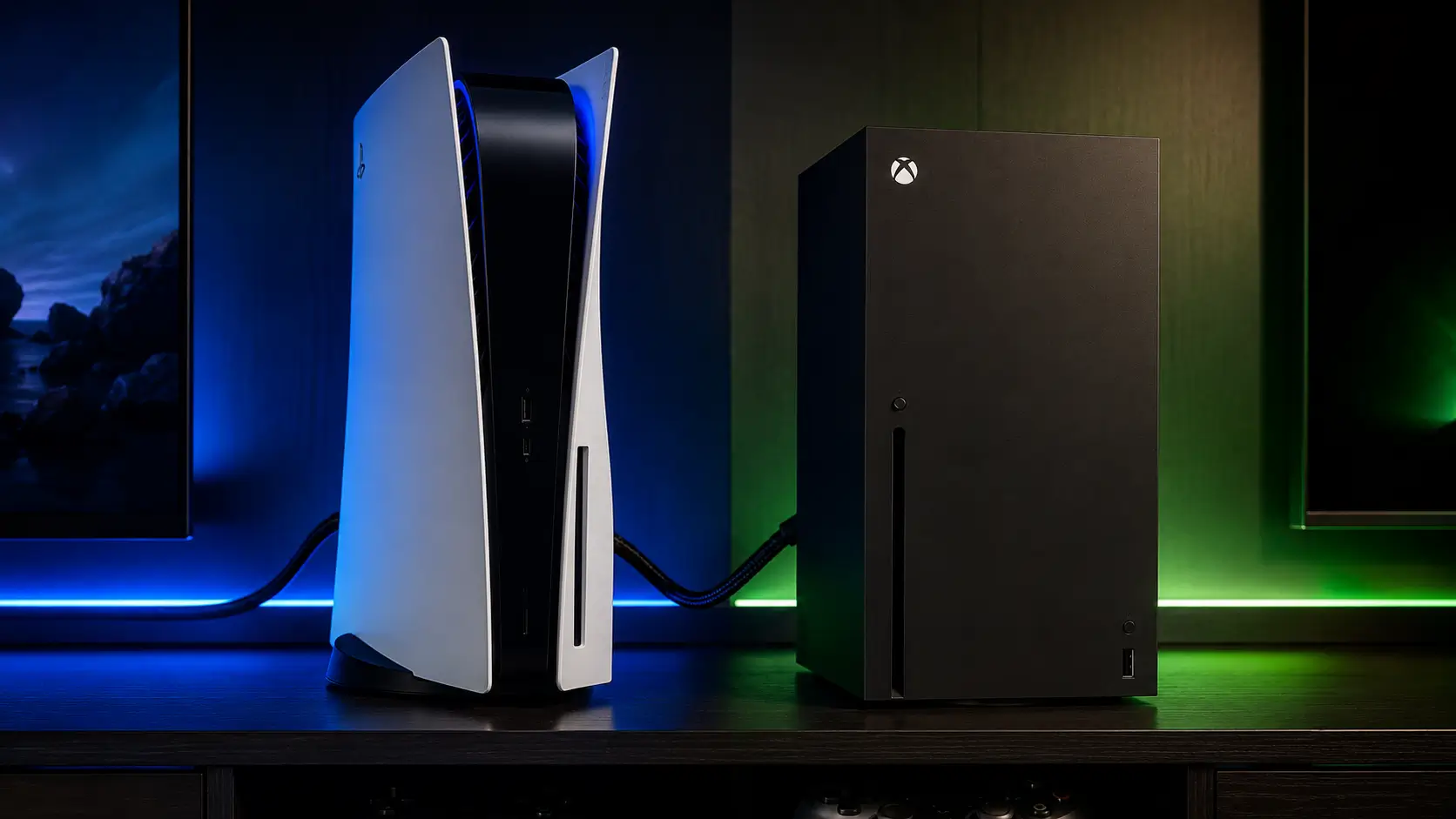
PS5 vs Xbox Series X HDMI bandwidth: Both consoles advertise HDMI 2.1. In reality, neither outputs full HDMI 2.1. Much of the console setup confusion stems from the gap between what is printed on the box and what the hardware actually does.
This article explains the actual bandwidth limit on each console’s HDMI port, what that means for color depth and chroma subsampling at 4K120, and why your Xbox and PS5 can appear significantly different on the same TV or monitor.
What Full HDMI 2.1 Bandwidth Actually Is
A maximum bandwidth of 48Gbps is permitted by the HDMI 2.1 specification. Most marketing materials use this number when referring to “HDMI 2.1.”
No assurance exists that all HDMI 2.1 devices will use the 48Gbps ceiling; it is merely a specification maximum. Without physically wiring the port for full bandwidth, manufacturers can still incorporate HDMI 2.1 features, VRR, ALLM, and support for higher refresh rates.
Both of the current-generation consoles experienced this, albeit to varying degrees.
PS5’s Actual HDMI Bandwidth: 32Gbps
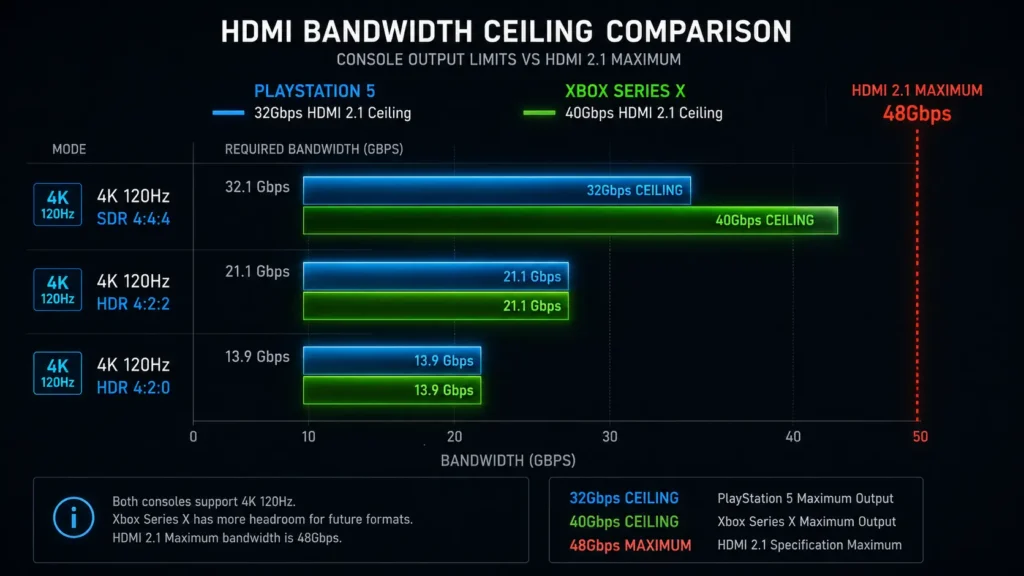
The PS5’s HDMI 2.1 port has a hardware limit of 32 Gbps, which is well below the full spec cap of 48 Gbps.
This isn’t a driver restriction or a bug Sony could fix. It’s a hardware choice made during the PS5’s design regarding the wiring of the actual HDMI transmitter chip inside the console.
The PS5 can still do things that HDMI 2.0-era consoles couldn’t, like 120Hz output and VRR, because 32Gbps is still significantly more bandwidth than HDMI 2.0’s 18Gbps ceiling. It falls short of the full 48Gbps that some HDMI 2.1 advertisements suggest.
Xbox Series X’s Actual HDMI Bandwidth: 40Gbps
The Xbox Series X’s HDMI 2.1 port supports up to 40Gbps, which is less than the PS5’s full 48Gbps capability.
PS5 vs Xbox Series X HDMI bandwidth: In isolation, the 8Gbps difference between the two consoles might not seem significant, but at the upper end of 4K120 bandwidth requirements, it’s enough headroom to matter for chroma sampling, which we’ll discuss below.
Why This Gap Actually Matters: Chroma Subsampling At 4K120
Chroma subsampling preserves full luminance (brightness) detail while reducing color data to conserve bandwidth. It is not a resolution-reduction method; it is a compression technique.
- 4:4:4 – is the most accurate, especially for fine text and sharp color edges; it requires the most bandwidth and provides full color and luminance data for each pixel.
- 4:2:2 – moderate bandwidth savings with color data sampled at half horizontal resolution
- 4:2:0 – color data sampled at half horizontal and vertical resolution; offers the biggest bandwidth savings for compressed video streaming.
Full 4:4:4 chroma at 4K120 with HDR enabled requires more bandwidth than either console’s HDMI port can physically provide, even Xbox’s 40Gbps.
| Configuration | Chroma required | Bandwidth needed | Fits PS5 (32Gbps)? | Fits Xbox (40Gbps)? |
|---|---|---|---|---|
| 4K 120Hz SDR, 4:4:4 8-bit | 4:4:4 | ~40 Gbps | No | Yes (tight) |
| 4K 120Hz HDR, 4:4:4 10-bit | 4:4:4 | ~48 Gbps | No | No |
| 4K 120Hz HDR, 4:2:2 10-bit | 4:2:2 | ~32 Gbps | Yes (at ceiling) | Yes |
| 4K 120Hz HDR, 4:2:0 10-bit | 4:2:0 | ~24 Gbps | Yes | Yes |
Since neither console can handle full 4:4:4 10-bit HDR at that resolution and refresh rate, they both switch to reduced chroma sampling when running 4K at 120Hz with HDR. With 4:2:2 chroma, the PS5 is already at its limit because of its 32Gbps cap, while the Xbox still has some room before hitting the same restriction.
Does Chroma Subsampling Actually Look Different In Games?
Because fast motion and intricate scene details can hide subtle color shifts, 4:2:2 versus 4:4:4 chroma subsampling in most game content is hard to notice during regular gameplay.
Certain content types, such as small colored text on a contrasting background, delicate color gradients, and some UI elements with thin colored lines against solid backgrounds, are where it becomes noticeable. The usual artifact is color fringing or a slight softness surrounding these elements.
Compared with the input lag and refresh rate factors we cover in our 1440p 165Hz monitor lag testing, the practical visual impact of chroma subsampling is negligible in fast-paced competitive shooters. Refresh rate and input lag should be given more consideration when deciding between resolution and chroma fidelity for competitive play.
Does This Affect Input Lag?
No, input lag isn’t the same as chroma subsampling or a bandwidth ceiling. A console that outputs 4:2:2 chroma isn’t intrinsically slower at registering inputs than one that outputs 4:4:4.
The bandwidth ceiling marginally affects image fidelity. In both our Elite Series 2 vs DualSense Edge controller comparison and our 1440p 165Hz monitor testing, we directly measured the input lag caused by a completely different chain of controller polling, game engine processing, and display processing lag.
The 8K Marketing Claim, And Why It Doesn’t Apply To Gaming
The Xbox Series X packaging mentions 8K compatibility. Although this claim is technically accurate, it has little bearing on gaming during the console’s current lifecycle.
The Xbox Series X’s 8K output is only available for certain non-gaming media playback scenarios; it isn’t a resolution at which games are rendered on the system, and no significant game content is created specifically for it. Most current cables and displays, as well as the console’s HDMI port, can’t support 8K at a real gaming refresh rate because of its bandwidth requirements.
Instead of viewing “8K” as a useful gaming feature to compare, view it as a specification checkbox on either console’s marketing.
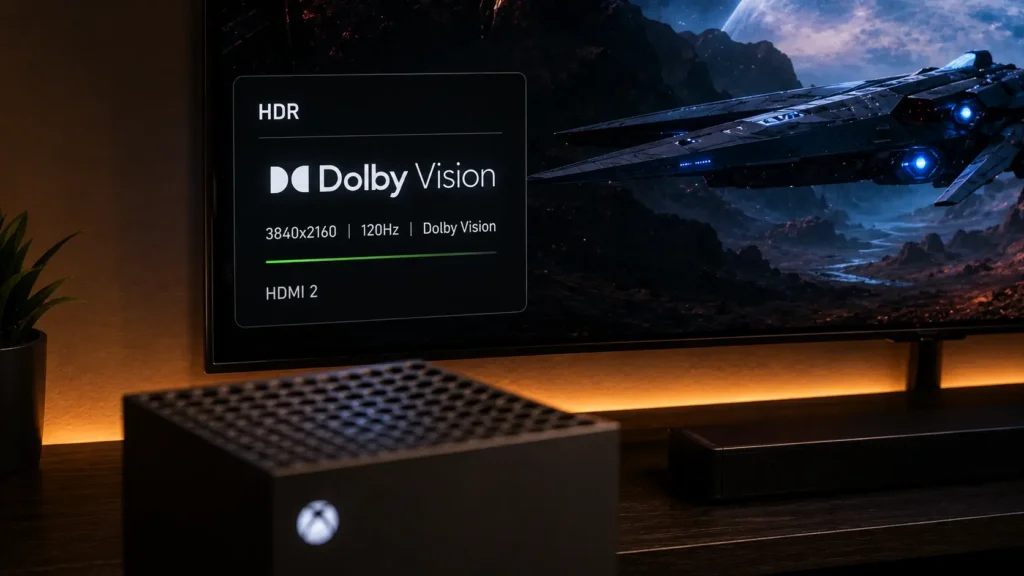
Dolby Vision: A Real Gaming Difference Between The Two
One HDR-related feature that varies significantly between the consoles goes beyond raw bandwidth. Xbox Series X games can use Dolby Vision. The PS5 completely supports no Dolby Vision for games or media.
Instead, game content on the PS5 lacks Dolby Vision’s dynamic, scene-by-scene metadata adjustments and uses standard HDR10.
Separate from the bandwidth discussion above, this is a real differentiator if Dolby Vision gaming support matters to your purchase decision and you have a display that supports it.
Cable Requirements Given These Bandwidth Ceilings
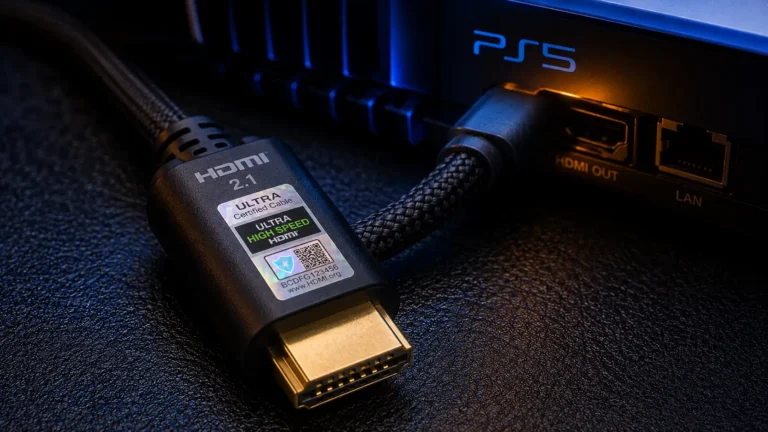
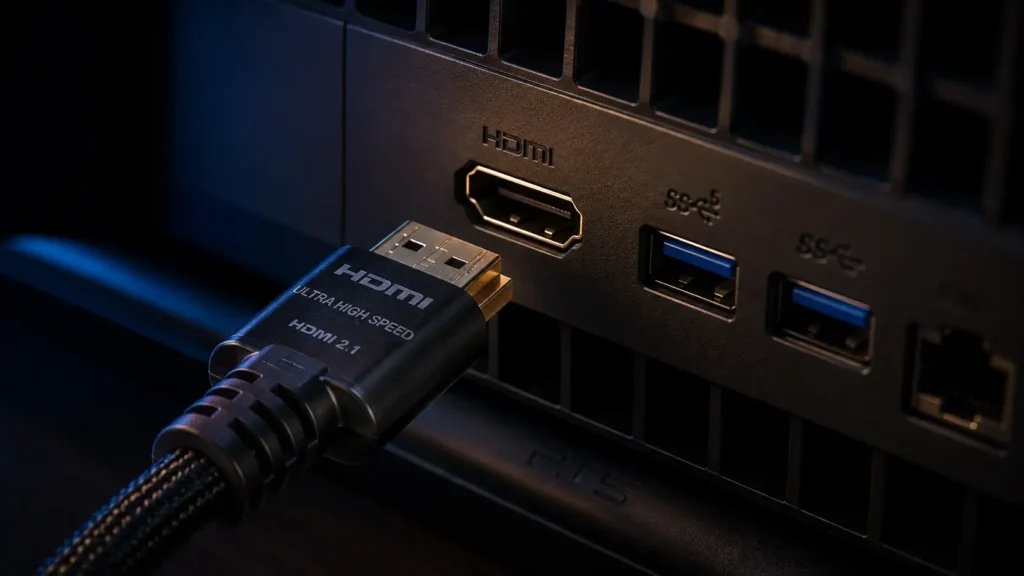
A certified Ultra High Speed HDMI cable rated for 48Gbps gives you more than enough capacity for either console, since both stay under 40Gbps.
So, you don’t need to pick a different cable for Xbox or PS5. The same certified cable easily handles both, with room to spare.
See our guide to HDMI 2.1 cable requirements for 120Hz gaming. It explains what the “HDMI 2.1” label really means and shows which certified cables we tested for stability at these speeds.
VRR And ALLM: Unaffected By The Bandwidth Gap
The metadata overhead for VRR and ALLM is small compared to each console’s total bandwidth. As a result, both the PS5 and Xbox Series X can support these features without any major trade-offs.
Bandwidth differences between consoles mainly affect the highest levels of resolution, refresh rate, and HDR color depth. They don’t affect how VRR or ALLM work.
: Check out our guide to VRR and ALLM on consoles for setup steps and tips on avoiding common mistakes.
The Bottom Line
Neither console supports the full 48Gbps HDMI 2.1 specification. The PS5 is capped at 32Gbps, while the Xbox Series X is capped at 40Gbps. As a result, when running 4K at 120Hz with HDR, both employ reduced chroma subsampling.
This bandwidth difference has little effect on gameplay in most games and at typical viewing distances. It may, however, limit the maximum color quality each console can produce.
The Xbox Series X’s 40Gbps offers more headroom before chroma subsampling becomes necessary, and its exclusive Dolby Vision gaming support is a separate, genuine differentiator worth considering alongside it if bandwidth ceiling is truly a deciding factor in your platform choice.
Most competitive players will find this bandwidth gap matters far less than input lag, controller performance, and display response time, which the rest of this cluster covers.
Frequently Asked Questions
Does PS5 support full HDMI 2.1 bandwidth?
The PS5’s HDMI 2.1 port is limited to 32Gbps, which is less than the 48Gbps the HDMI 2.1 specification allows. A software update can’t change this; it is a fixed hardware limitation.
Does Xbox Series X have better HDMI bandwidth than PS5?
Indeed. Compared to the PS5’s 32Gbps cap, the Xbox Series X supports up to 40Gbps over HDMI 2.1. This increases Xbox’s bandwidth headroom before it needs chroma subsampling at 4K120 with HDR turned on.
Why does 4K120 HDR use chroma subsampling on both consoles?
To get full 4:4:4 chroma at 4K120 with 10-bit HDR, you need about 48Gbps of bandwidth. That’s more than the HDMI ports on either console can support. Because of this, both the PS5 and Xbox Series X use lower chroma sampling, usually 4:2:2 or 4:2:0.
Does chroma subsampling affect gaming performance or input lag?
No. Chroma subsampling affects color data fidelity, not input lag or performance. Input lag depends on other factors, including controller polling rate, game engine processing, and display response time.
Does PS5 support Dolby Vision for gaming?
No. The PS5 doesn’t support Dolby Vision for games or media and instead relies on standard HDR10. Xbox Series X does support Dolby Vision for gaming content on titles that implement it, which is a genuine feature difference separate from the HDMI bandwidth comparison.
More Useful Tools
Vertical Stack Ceiling Clearance Calculator | Monitor Stack Height Tool
Under-Desk Mount Torque Calculator | PC Mount Load Checker
Desk Boundary Bass Gain Estimator | Speaker Boominess Calculator