QD-OLED Penta Tandem Explained: Why Your Next Gaming Monitor Might Look Dramatically Different
QD-OLED Penta Tandem, Gaming monitor technology has quietly been through a few real breakthroughs in the last couple of years, but most of them have been incremental. Faster refresh rates, slightly better color, slightly higher brightness. Samsung Display’s newest OLED panel technology is being talked about differently. Reviewers who have seen it in person are describing it as making current OLED monitors look noticeably dim by comparison, which is a strong claim in a category that already produces some of the best looking displays available. Here is what QD-OLED Penta Tandem actually is, and whether it is worth waiting for.
What QD-OLED actually is, as a quick refresher
QD-OLED displays combine quantum dot technology with OLED panels, giving you the deep blacks and pixel perfect contrast OLED is known for, along with the enhanced brightness and wider color range that quantum dot technology adds on top. This combination has made QD-OLED one of the most respected display technologies available for both TVs and high end gaming monitors over the past several years, competing directly against LG’s rival OLED approach. tomsguide(QD-OLED Penta Tandem)
What Penta Tandem actually changes
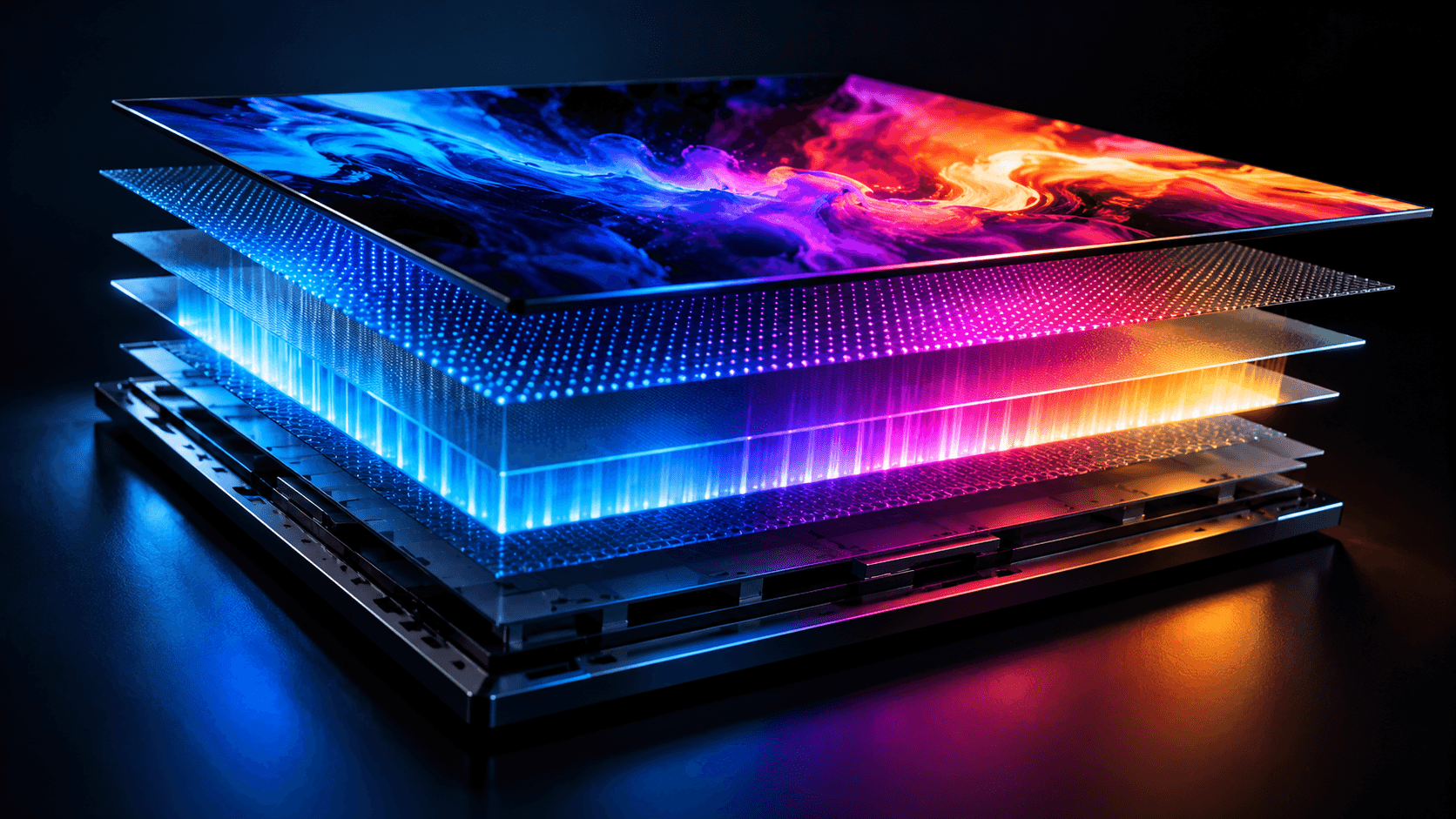
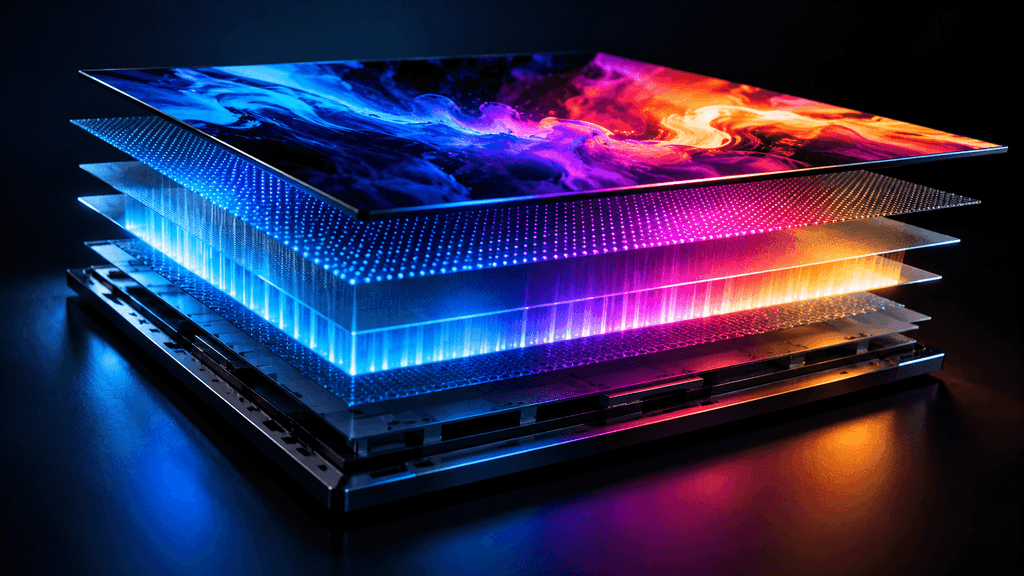
The “Penta” in Penta Tandem refers to the number five, describing an updated five layer organic light emitting structure, while “Tandem” describes the stacked, series style OLED emission approach used to improve efficiency and sustain performance as panel demands increase. Specifically, Samsung Display replaced the previous four layer blue emitting structure with a new five layer version. guru3d3dnews(QD-OLED Penta Tandem)
This matters because the blue emitting layer is the most important part of a QD-OLED panel’s structure, since QD-OLED panels use blue OLED emission as their core light source, with quantum dots then converting portions of that blue light into red and green to produce the final image. As resolutions climb and pixel density increases, each individual pixel’s effective emission area shrinks, making it progressively harder to maintain stable brightness without pushing the organic materials inside the panel harder than is ideal. Adding an additional emitting layer directly addresses that specific engineering challenge. guru3dguru3d(QD-OLED Penta Tandem)
The real world numbers behind the hype
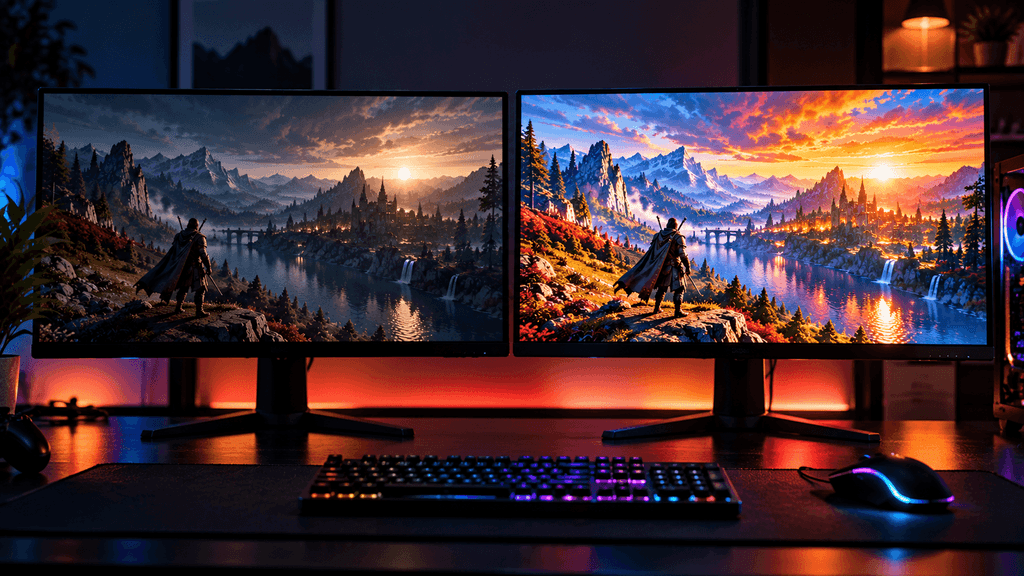
Samsung Display states that compared to the previous four layer QD-OLED generation, Penta Tandem improves luminous efficiency by 1.3 times and extends panel lifespan by a full 2 times. As a result, products using this technology are reaching industry leading peak brightness figures of up to 4,500 nits for televisions and 1,300 nits for monitors specifically, measured at a 3 percent on pixel ratio. oled-infooled-info(QD-OLED Penta Tandem)
For context on what that brightness improvement actually looks like in a finished product, Samsung’s 2026 flagship OLED television is roughly 30 percent brighter than the previous year’s model, translating to a peak brightness of around 2,750 nits in practice. That is a genuinely significant jump for OLED display technology, a category that has historically trailed behind traditional LED backlit displays specifically on peak brightness, even while winning decisively on contrast and black levels. techradar(QD-OLED Penta Tandem)
The longevity improvement is arguably just as significant as the brightness gain, even though it gets less marketing attention. OLED panel longevity and the risk of long term image retention, sometimes called burn in, have remained a lingering concern for some buyers considering OLED displays for everyday use, including extended desktop work rather than purely watching video content. A panel genuinely rated to last twice as long directly addresses that specific concern.(QD-OLED Penta Tandem)
Where this technology is actually showing up
Samsung Display points to its existing 27 inch 4K QD-OLED panel as the first to use this five layer tandem structure, achieving a notably high 160 pixels per inch pixel density. This specific panel is described as the world’s first OLED panel to achieve 4K resolution at that pixel density in a 27 inch size, alongside a separate 31.5 inch 4K panel that has also received official DisplayHDR True Black 500 certification. guru3doled-info
For 2026, Samsung Display has outlined plans to extend Penta Tandem technology across its full range of panel sizes, supplying it for flagship products from major display manufacturers, including an upcoming 49 inch dual QHD ultrawide panel in addition to the existing sizes already announced. Several monitor brands that have historically used Samsung’s QD-OLED panels, including MSI, are expected to bring this technology into their gaming monitor lineups. guru3dgamestar(QD-OLED Penta Tandem)
This is not entirely brand new technology, and that is worth knowing
It is worth understanding that this specific five layer panel generation was actually first shown at CES 2025, and Samsung Display is now applying new, more prominent branding to technology that, in some specific products, buyers may already be using without realizing it. Some currently available OLED monitors, for instance certain Asus models using Samsung’s fourth generation QD-OLED panels, are already built on this same underlying five layer architecture, even without the new Penta Tandem name attached to them at the time of purchase. gamestarwhathifi(QD-OLED Penta Tandem)
This is a useful detail for anyone currently shopping for a high end OLED gaming monitor. The marketing name is new, but the underlying hardware improvement has already been quietly shipping in select premium monitors for a while. It is worth checking a specific monitor’s actual panel generation and specifications rather than assuming a lack of Penta Tandem branding means it lacks the underlying technology.(QD-OLED Penta Tandem)
How this compares to what LG is doing
Samsung is not alone in using a stacked, multi layer approach to improve OLED brightness and longevity. Rival display maker LG Display has used a similar stacking method in its own Primary RGB Tandem OLED technology, though LG’s approach differs by using separate red, green, and two distinct blue OLED layers rather than relying on quantum dots to generate color the way Samsung’s QD-OLED approach does. Samsung’s new five layer structure represents one additional layer compared to LG’s four layer tandem approach specifically. whathifiwhathifi(QD-OLED Penta Tandem)
This ongoing back and forth between the two major OLED panel manufacturers has been one of the most productive rivalries in display technology recently, with each company’s improvements pushing the other to respond, a pattern that has directly benefited buyers through consistently improving OLED displays across both TVs and gaming monitors.
Why this actually matters for PC gaming specifically
Brightness has historically been one of OLED’s genuine weak points compared to high end traditional LED backlit displays, particularly in brightly lit rooms or for content with large bright areas on screen, where OLED panels have sometimes struggled to match the sheer peak brightness of competing display technologies. A significant brightness improvement directly addresses this weakness without sacrificing the contrast and color advantages that make OLED so popular for gaming in the first place.(QD-OLED Penta Tandem)
The longevity improvement matters specifically for PC use in a way it does not always matter as much for television viewing. Desktop use often involves static elements, taskbars, user interface elements, HUD overlays in certain games, that stay in the same position on screen for extended periods, which is precisely the kind of use pattern that has historically posed the greatest image retention risk for OLED panels. A panel rated to last twice as long under these conditions is a meaningful, practical improvement for PC gamers and everyday desktop users alike, not just a marketing number.(QD-OLED Penta Tandem)
Should you wait for a Penta Tandem monitor, or buy now
This depends heavily on how urgently you need a new display and how much the specific improvements here matter to your use case. If you are currently satisfied with your display and specifically want the brightness and longevity improvements this new technology promises, it is reasonable to wait, given that Samsung Display has outlined a broad rollout plan across panel sizes throughout the rest of the year.(QD-OLED Penta Tandem)
If you need a monitor now and are comparing current generation OLED options, remember that some existing premium models already use the underlying five layer architecture even without the new branding attached, so checking the actual specific panel generation in a monitor’s detailed specifications, not just the marketing name on the box, is the more reliable way to know what you are actually buying.(QD-OLED Penta Tandem)
The bottom line on QD-OLED Penta Tandem
This represents a genuine, meaningful engineering improvement to QD-OLED technology, not just a marketing refresh with a new name attached to existing hardware. The brightness and longevity gains directly address two of the most commonly cited weaknesses of OLED displays, and the technology’s planned rollout across a full range of panel sizes throughout the year suggests gaming monitors specifically will be a major beneficiary. Whether it is worth waiting for comes down to your own timeline and how much these specific improvements matter for how you actually use your display.
Are you currently using an OLED gaming monitor, and have brightness or longevity ever been a concern for you? Let us know in the comments.
FAQ: QD-OLED Penta Tandem
What does Penta Tandem actually mean?
Penta refers to five, describing a new five layer organic light emitting structure used in Samsung Display’s latest QD-OLED panels, up from the four layer structure used in the previous generation.(QD-OLED Penta Tandem)
How much brighter is Penta Tandem compared to older QD-OLED panels?
Samsung Display states Penta Tandem improves luminous efficiency by 1.3 times compared to the previous four layer generation, reaching peak brightness figures up to 4,500 nits for TVs and 1,300 nits for monitors.(QD-OLED Penta Tandem)
Does Penta Tandem actually fix OLED burn in concerns?
It does not eliminate the risk entirely, but Samsung Display states the technology extends panel lifespan by 2 times compared to the previous generation, which meaningfully reduces long term image retention risk for extended desktop and gaming use.
Is Penta Tandem completely new technology?
Not entirely. The underlying five layer panel architecture was first shown at CES 2025, and some currently available monitors already use this structure, even without the official Penta Tandem branding attached at the time.(QD-OLED Penta Tandem)
How is this different from LG’s OLED technology?
Both companies use a stacked, multi layer approach to improve brightness and longevity, but LG’s Primary RGB Tandem OLED uses four layers with separate red, green, and blue OLED emitters, while Samsung’s QD-OLED approach uses five layers of blue emission paired with quantum dots for color.(QD-OLED Penta Tandem)
When will Penta Tandem monitors be widely available?
Samsung Display has stated it plans to expand this technology across its full range of panel sizes throughout the year, supplying it to flagship products from multiple monitor and TV manufacturers.(QD-OLED Penta Tandem)
More Useful Tools
Vertical Stack Ceiling Clearance Calculator | Monitor Stack Height Tool
Under-Desk Mount Torque Calculator | PC Mount Load Checker
Desk Boundary Bass Gain Estimator | Speaker Boominess Calculator