L Shaped Standing Desks: Are They Actually Practical, or Just a Bigger Headache to Adjust?
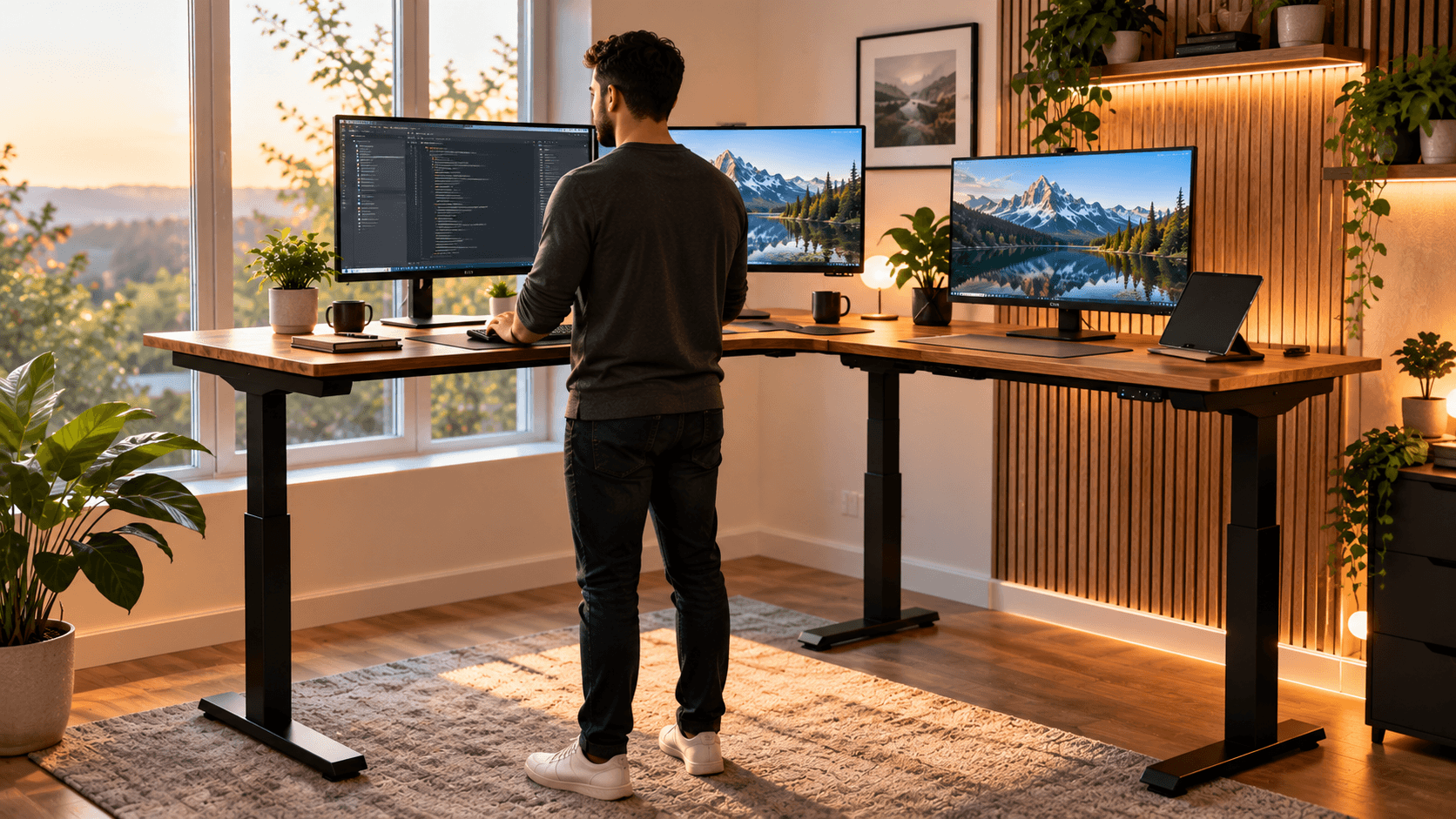
l shaped standing desk, A standing desk already solves one problem, giving you the option to switch between sitting and standing throughout the day. An L-shaped standing desk tries to solve a second one at the same time, giving you enough surface area for a real multi monitor setup, a laptop dock, or simply more room to spread out. On paper, combining both sounds like the obvious upgrade. In practice, there are real trade offs worth understanding before you commit the desk space and the money.
What makes an L-shaped standing desk different
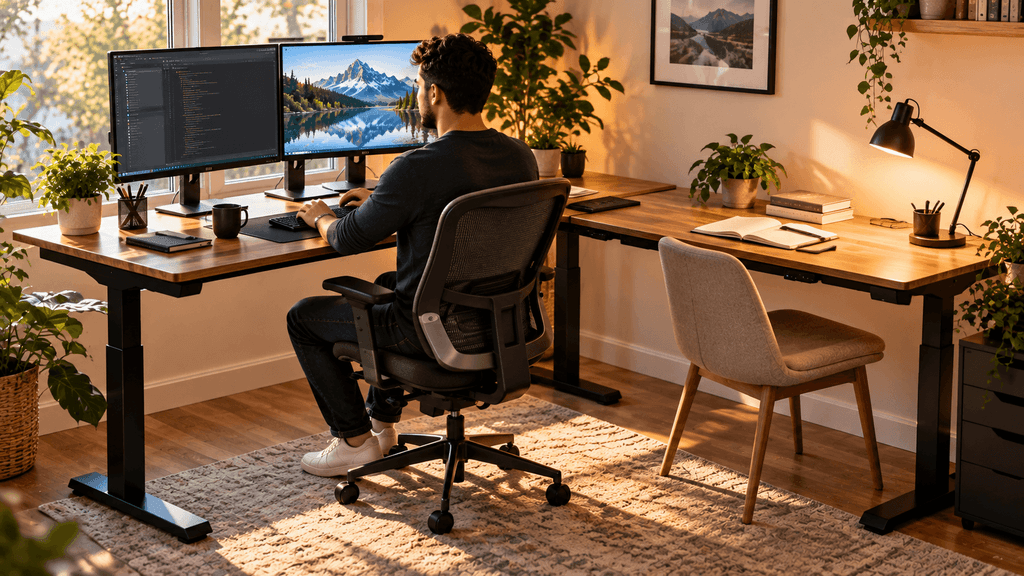
A standard standing desk is a single rectangular surface that raises and lowers as one unit. An L-shaped version adds a second surface running perpendicular to the first, usually meeting in a corner, giving you significantly more total desk area without needing extra floor length against one wall. The adjustable height mechanism still works the same way as a standard standing desk, using either a manual crank or, more commonly on L-shaped models, an electric motor to raise and lower the whole frame.(L Shaped Standing Desk)
Why people are drawn to this combination
You get genuine room for a serious multi monitor setup. If you run two or three monitors, a laptop, and still want space for a notebook or a mouse pad with actual room to move, a standard rectangular desk can feel cramped fast. The extra leg of an L-shaped desk gives you a natural place to put a second monitor, a printer, or a secondary work area without crowding your main workspace.(L Shaped Standing Desk)
It uses corner space that would otherwise go to waste. Most rooms have at least one corner that ends up empty or holds nothing more useful than a plant. An L-shaped desk turns that corner into usable surface area, which matters a lot in smaller home offices where floor space is already tight.(L Shaped Standing Desk)
It genuinely separates tasks without needing a second piece of furniture. One leg can hold your main monitor setup for focused work, while the other handles a side task, writing, sketching, or a laptop for a video call, without needing a separate table or desk elsewhere in the room.(L Shaped Standing Desk)
Where the real tradeoffs show up
The height adjustment mechanism has more weight to lift and more surface to keep level. A longer, heavier L-shaped top puts more strain on the motor and frame than a standard rectangular desk, and cheaper models can struggle here, sometimes raising unevenly or feeling less stable at full height, particularly at the far end of the longer leg. This is one area where paying for a well reviewed, sturdier model actually matters more than it does with a simple rectangular standing desk.(L Shaped Standing Desk)
It needs a lot more floor space than people expect. An L-shaped desk does not just extend outward, it also needs clearance on both sides to actually use both legs comfortably, including enough room for a chair to roll between them if you plan to swivel from one side to the other. Measuring your actual room carefully before buying matters more here than with almost any other desk shape.(L Shaped Standing Desk)
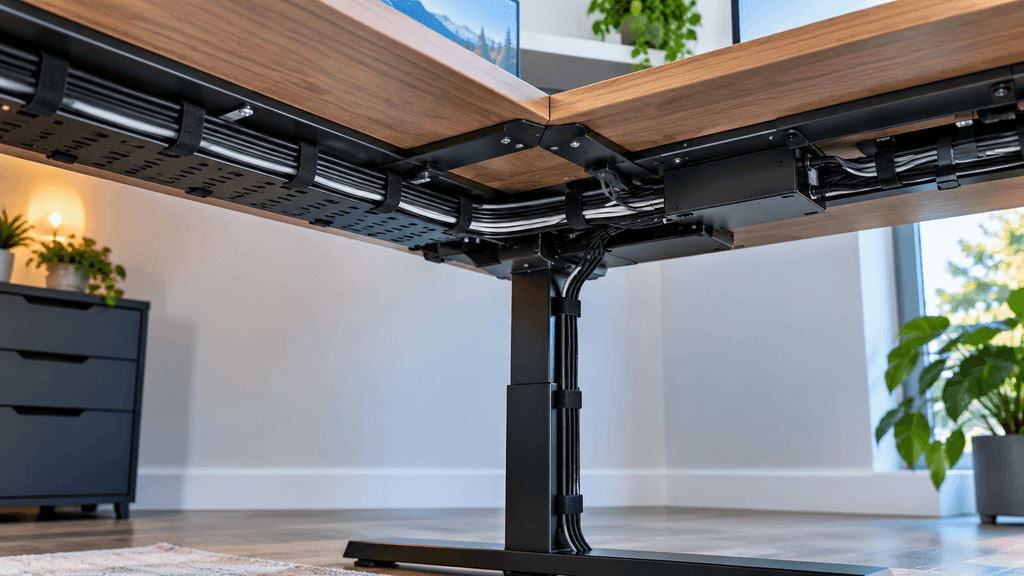
Cable management gets more complicated. With monitors, chargers, and accessories potentially spread across two surfaces meeting at a corner, keeping cables tidy and out of the way of the height adjustment mechanism takes more planning than a single rectangular surface does, especially since cables need to flex properly every time the desk height changes.(L Shaped Standing Desk)
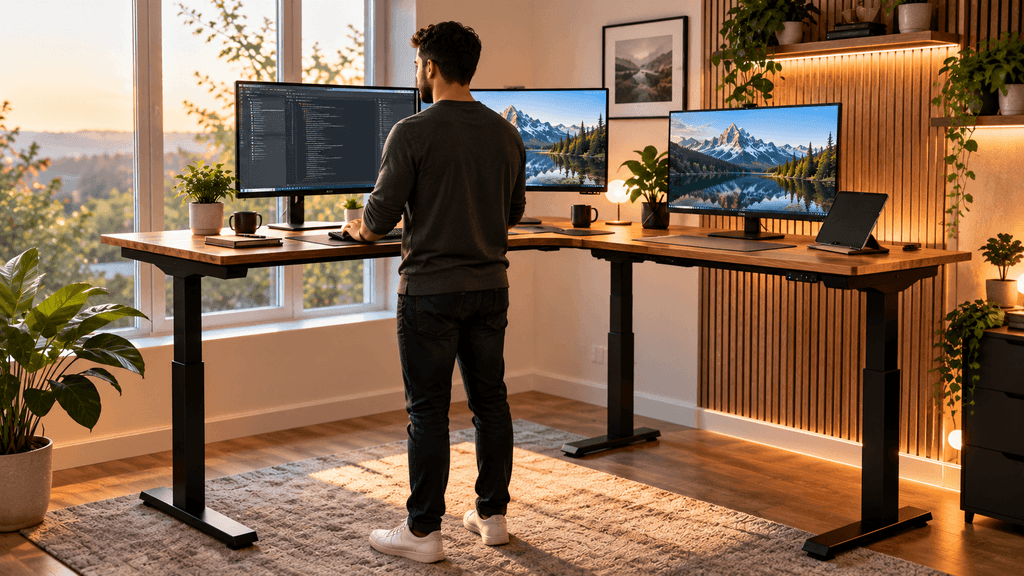
Not every room layout actually suits an L shape. If your room does not have a natural corner near a power outlet, or if the space is shaped in a way that makes an L-shaped desk block a doorway or walking path, the extra surface area stops being a benefit and starts being an obstacle.(L Shaped Standing Desk)
What to actually check before buying one
Weight capacity, and specifically where it is rated. Some L-shaped standing desks list a lower weight capacity for the extended corner section than the main leg, since that area typically has less direct support underneath. If you plan to put a heavy monitor arm or a lot of equipment on the corner specifically, check this detail rather than assuming the desk’s overall weight rating applies evenly across the whole surface.(L Shaped Standing Desk)
Stability at full standing height. Look specifically for reviews or specifications mentioning wobble or stability testing, since this is the area where L-shaped desks most commonly disappoint compared to simpler rectangular designs, particularly at the far end of the longer leg.(L Shaped Standing Desk)
Motor speed and noise, if going electric. A slower, noisier motor becomes more noticeable on a larger desk simply because it has more weight to move, so checking real reviews rather than just the manufacturer’s spec sheet is worth the extra few minutes.
Actual corner measurements against your room. Measure both legs of the desk along with the clearance you will need around the outside of the L shape, not just the total square footage, since a desk that technically fits a room can still end up feeling cramped if it blocks natural walking paths.(L Shaped Standing Desk)
Is it actually worth it for you
If you genuinely use the extra surface area, running a real multi monitor setup, splitting focused work from a secondary task area, or simply needing more desk space than a standard desk provides, an L-shaped standing desk solves a real problem and is worth the extra cost and planning. If your main goal is just the ability to stand and sit throughout the day without needing all that additional surface area, a standard rectangular standing desk will do the same core job for considerably less money, less floor space, and a simpler, more stable lift mechanism.(L Shaped Standing Desk)
It is also worth being honest about your room. A fantastic L-shaped desk crammed into a space too small to comfortably use both legs ends up feeling more like clutter than an upgrade, regardless of how good the desk itself actually is.
A practical tip if you do go with an L-shaped standing desk
Plan your monitor and equipment placement before the desk arrives, not after, since figuring out cable routing and equipment placement around an already assembled large desk is considerably more annoying than planning it out on paper first. If possible, position your primary monitor setup on the shorter, more stable leg of the L, keeping your heaviest or most frequently adjusted equipment away from the far corner, where stability is more likely to be a concern during height changes.(L Shaped Standing Desk)
The bottom line on L-shaped standing desks
An L-shaped standing desk is a genuine upgrade for anyone who actually needs the extra surface area it provides, but it comes with real tradeoffs in stability, floor space requirements, and cable management complexity that a standard rectangular standing desk simply does not have to deal with. Know honestly whether you need the corner space or just want the sit to stand flexibility, measure your room carefully, and choose a model with a build quality that matches the extra demands a larger, heavier top places on the lifting mechanism.(L Shaped Standing Desk)
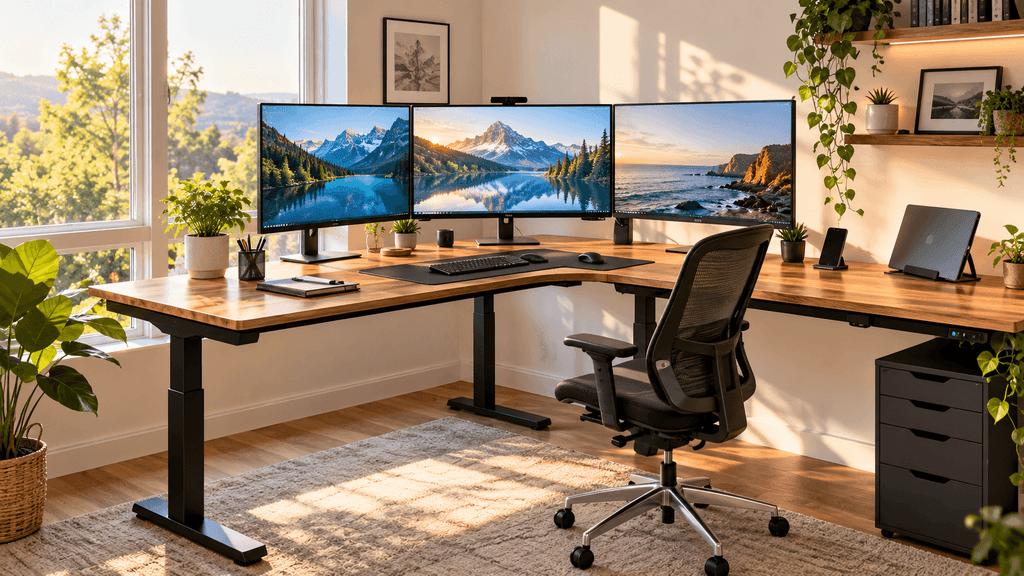
Would an L-shaped standing desk actually fit your setup, or does your room work better with a simpler rectangular one? Let us know in the comments.
FAQ: L Shaped Standing Desk
Are L-shaped standing desks less stable than rectangular ones?
They can be, particularly at the far end of the longer leg, since the extra surface area puts more demand on the height adjustment mechanism and frame. Choosing a well reviewed, sturdier model helps reduce this issue significantly.(L Shaped Standing Desk)
How much floor space does an L-shaped standing desk actually need?
More than people typically expect. Beyond the desk’s own footprint, you need clearance on both sides to comfortably use both legs, plus room for a chair to move between them, so measuring your actual room carefully before buying is important.
Can I put a heavy monitor arm on the corner section of an L-shaped desk?
Check the weight capacity specifically for that section first, since some L-shaped desks rate the corner area lower than the main leg due to reduced direct support underneath that specific part of the surface.(L Shaped Standing Desk)
Is a manual or electric L-shaped standing desk better?
Electric models are generally easier to use regularly since adjusting height takes no physical effort, which matters more on a larger, heavier L-shaped top. Manual models are usually cheaper but require more effort, especially given the added weight of the larger desk size.
Do I need an L-shaped desk if I just want a standing desk?
Not necessarily. If your main goal is simply the ability to sit and stand throughout the day without needing extra surface area, a standard rectangular standing desk accomplishes the same core benefit for less money and with a simpler, more stable lift mechanism.
What is the best way to arrange monitors on an L-shaped standing desk?
Positioning your primary monitor setup on the shorter, more stable leg while using the other leg for secondary tasks or equipment is a commonly recommended approach, since it keeps your main workspace on the more stable, direct part of the desk.(L Shaped Standing Desk)
More Useful Tools
Vertical Stack Ceiling Clearance Calculator | Monitor Stack Height Tool
Under-Desk Mount Torque Calculator | PC Mount Load Checker
Desk Boundary Bass Gain Estimator | Speaker Boominess Calculator