Standing Desk and Treadmill Combos: Do Walking Desks Actually Work for Real Workdays?
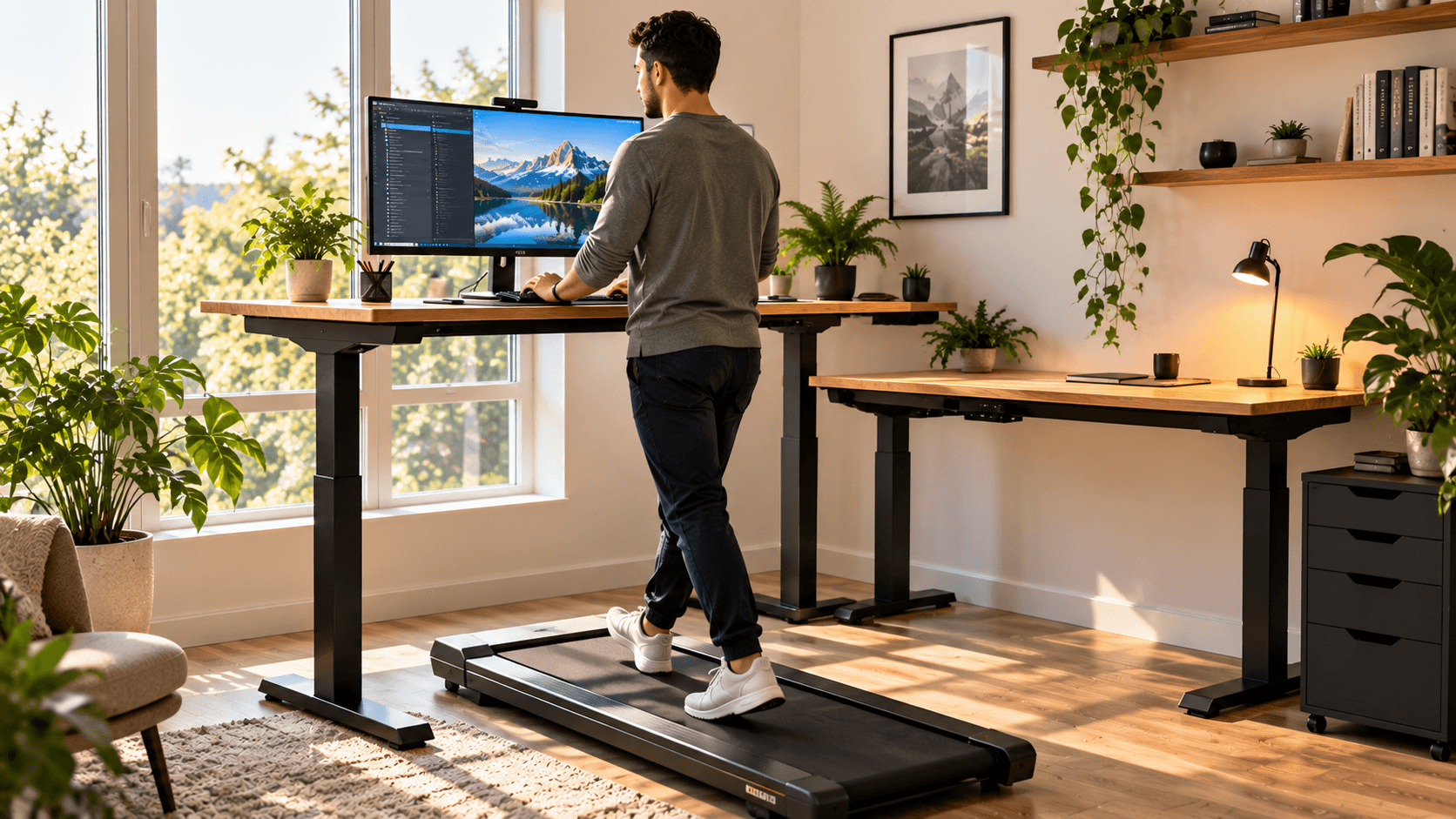
A standing desk solves the problem of sitting too much. A treadmill desk tries to go a step further, letting you actually walk while you work instead of just standing in place. It sounds like the obvious next upgrade if you already like the idea of moving more during your day, but combining a full workday with a moving treadmill belt underneath you comes with real practical challenges that standing alone does not. Here is an honest look at what actually works, what does not, and whether this setup fits your actual job.
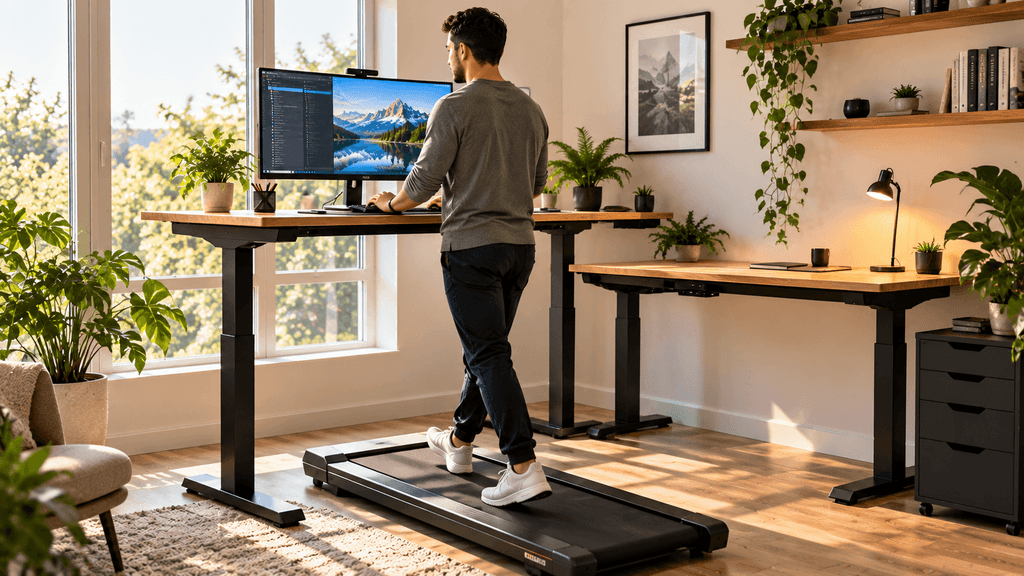
What a standing desk and treadmill combo actually is
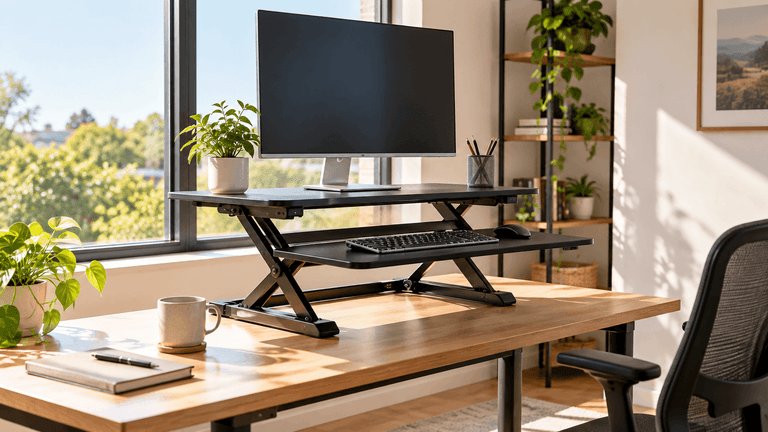
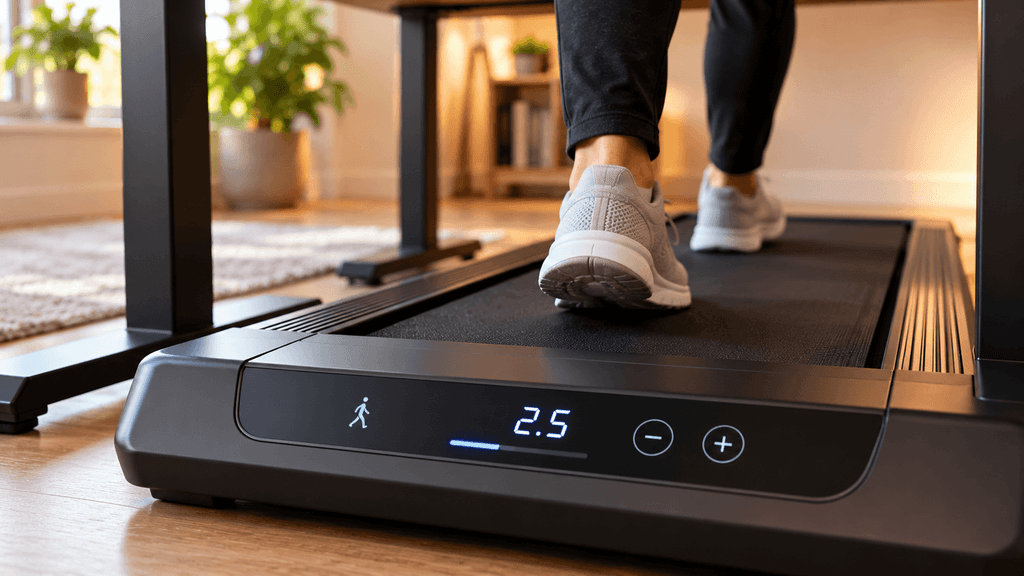
This setup pairs a height adjustable desk, similar to a standard standing desk, with a treadmill positioned underneath it, usually a slimmer, quieter model built specifically for this purpose rather than a traditional running treadmill. The desk sits at standing height while you walk at a slow, steady pace, letting you type, take calls, or read while your legs stay in motion instead of standing still or sitting the whole day.(Standing Desk and Treadmill)
Why people are drawn to this setup
It adds real movement to a day that would otherwise involve almost none. A standing desk alone still keeps you stationary, just upright instead of seated. Walking, even slowly, burns more energy, improves circulation, and breaks up the long stretches of stillness that make up most office and remote work days.(Standing Desk and Treadmill)
It can genuinely improve focus and energy for some people. A lot of walking desk users report feeling noticeably less sluggish during long afternoon stretches, when sitting still for hours tends to bring on a mental fog that a bit of light movement can help cut through.
It fits naturally into certain types of work better than others. Listening heavy tasks like calls, podcasts style meetings, or reading through documents pair well with slow walking, since they do not require the same precision as detailed typing or careful mouse work.
Where the real challenges show up
Typing accuracy drops, even at slow speeds. Even a gentle walking pace introduces enough movement to measurably affect typing precision and mouse accuracy for a lot of people, especially during detailed work like spreadsheets, design tools, or precise formatting. Many walking desk users end up reserving the treadmill specifically for calls, reading, and lighter tasks, switching to standing or sitting for anything requiring careful, precise input.(Standing Desk and Treadmill)
Noise can be a real issue, especially on calls. Even quiet treadmills built for this purpose produce some motor hum and footstep sound, which can be picked up by a microphone during video calls or phone meetings, something worth testing before relying on it during important calls specifically.(Standing Desk and Treadmill)
It takes real floor space, more than a standard standing desk alone. A treadmill base adds meaningful length and width to your setup beyond just the desk itself, and unlike a standing desk you can push against a wall when not in use, a treadmill desk generally needs to stay in roughly the same spot permanently, or be moved with real effort.
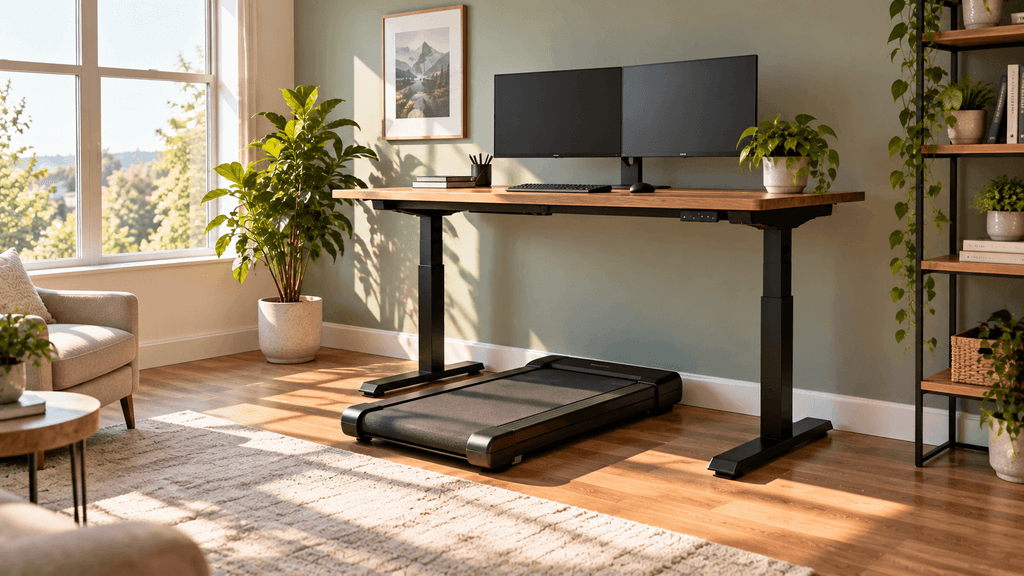
The adjustment period is longer than people expect. Walking steadily while focusing on work, rather than walking and paying attention mainly to the walking itself, takes practice. Most new users start at a very slow pace and gradually work up to a comfortable rhythm over several weeks, rather than jumping straight into a full workday on day one.
Cost adds up quickly. A quality treadmill base built specifically for under desk use, paired with a suitable height adjustable desk, costs considerably more than a standard standing desk alone, and cutting corners on the treadmill specifically tends to show up fast in motor noise, belt durability, and overall stability.(Standing Desk and Treadmill)
What actually makes a walking desk setup work day to day
Start slower than feels necessary. A pace of around 1 to 2 miles per hour is a common comfortable starting point for working while walking, noticeably slower than a typical casual walking pace, since the goal is steady, low effort movement that does not interfere with concentration, not exercise intensity.(Standing Desk and Treadmill)
Match tasks to the right part of your day. Save precise, detail heavy work for standing or sitting, and use the treadmill specifically for calls, reading, email, and lighter tasks where small movement does not meaningfully affect your accuracy.
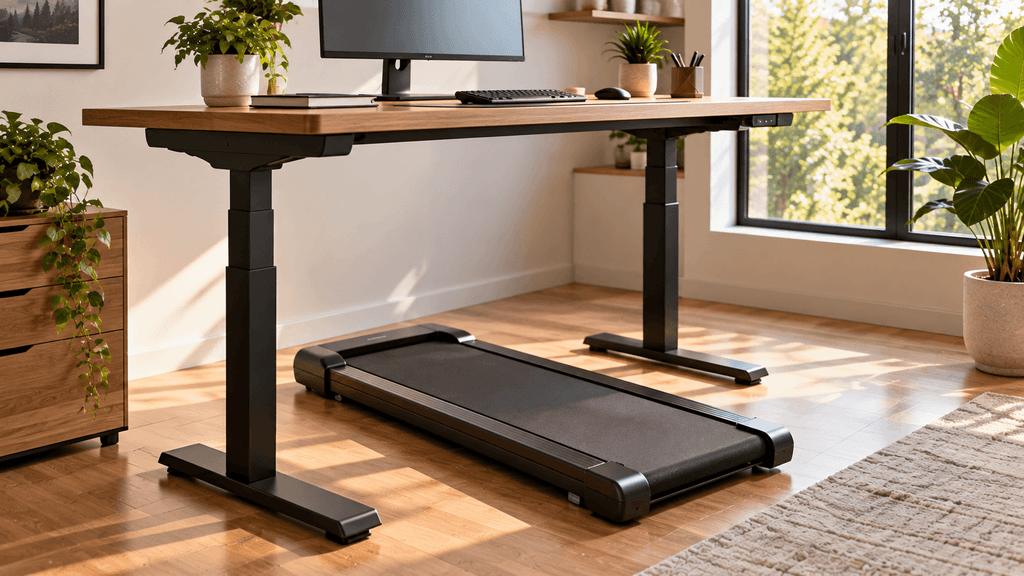
Check desk height carefully once walking. Your natural arm and hand position shifts slightly while walking compared to standing still, so a desk height that felt perfect while stationary may need a small adjustment once you are actually moving.
Build up gradually rather than committing to full days immediately. Starting with short, comfortable sessions and slowly increasing duration over several weeks helps you find a sustainable rhythm, rather than risking fatigue or frustration from trying to do an entire workday on a treadmill right away.
What to check before buying one
Noise level specifically, ideally from independent reviews rather than marketing claims, since this affects both your own focus and how you sound on calls, and marketing descriptions like “quiet” vary a lot between brands in actual practice.
Maximum incline and speed range, even though most work sessions use a low, flat setting, since a wider range gives you more flexibility as you get more comfortable with the setup over time.(Standing Desk and Treadmill)
Belt size and sturdiness, particularly if you are taller or have a longer stride, since a cramped belt can feel awkward and unsafe regardless of how good the rest of the unit is.
Desk height range and weight capacity, making sure it comfortably accommodates your monitor setup at a height that works both standing still and while walking, not just one or the other.(Standing Desk and Treadmill)
Who this setup genuinely makes sense for
If your work involves a meaningful amount of calls, reading, or lighter tasks throughout the day, and you have the floor space and budget for a proper setup, a walking desk can be a genuinely valuable way to add real movement to an otherwise sedentary day. If your job is heavy on precise, detailed work like design, data entry, or anything requiring careful mouse accuracy for most of the day, you may find yourself using the treadmill function far less than you expected, making a simple standing desk a more practical and considerably cheaper choice.(Standing Desk and Treadmill)
A realistic way to think about the investment
Before buying a combined setup, it is worth being honest about how much of your actual workday would realistically happen while walking versus how much would happen standing still or sitting regardless. For a lot of people, a standing desk alone covers most of the benefit at a fraction of the cost and space, with a treadmill desk only clearly worth the extra investment if a genuinely significant portion of your day involves the kind of lower precision tasks that pair well with walking.(Standing Desk and Treadmill)
The bottom line on standing desk and treadmill combos
A walking desk is not a replacement for a standing desk, it is a bigger commitment layered on top of one, with real benefits for movement and energy but real tradeoffs in typing precision, noise, floor space, and cost. It genuinely works well for the right kind of workday, heavy on calls and lighter tasks, and genuinely frustrates people whose work demands precise, sustained focus for most of the day. Know honestly which kind of day you actually have before committing the money and the space.(Standing Desk and Treadmill)
Does your workday involve enough calls and reading to make a walking desk worth it, or is most of your work too detail heavy for that? Let us know in the comments.
FAQ: Standing Desk and Treadmill Combos
Can I type accurately while walking on a treadmill desk?
For light typing like emails or quick messages, many people manage fine at a slow pace. For detailed, precise work like spreadsheets or design tools, typing accuracy tends to drop even at slow speeds, so most users switch to standing or sitting for that kind of task instead.
What walking speed is best for a treadmill desk?
Around 1 to 2 miles per hour is a common comfortable starting point, noticeably slower than normal walking pace. The goal is steady, low effort movement that does not interfere with concentration, not exercise intensity.(Standing Desk and Treadmill)
Will my coworkers hear the treadmill during video calls?
It is possible. Even quiet treadmills built for under desk use produce some motor hum and footstep sound that a microphone can pick up, so it is worth testing your specific setup on a call before relying on it for important meetings.(Standing Desk and Treadmill)
How much floor space does a treadmill desk need?
More than a standard standing desk, since the treadmill base adds significant length and width beyond the desk itself. Unlike a standing desk you can push against a wall, a treadmill desk generally needs to stay in roughly the same spot.(Standing Desk and Treadmill)
How long does it take to get used to working while walking?
Most people need several weeks to build up a comfortable rhythm, starting with short sessions and gradually increasing duration, rather than attempting a full workday on the treadmill right away.(Standing Desk and Treadmill)
Is a treadmill desk worth it if I mostly do detail heavy work?
Probably not as much. If your day involves a lot of precise typing, design work, or careful mouse accuracy, you may end up using the treadmill function far less than expected, making a standard standing desk a more practical and cheaper choice.
Do I need to adjust my desk height differently for walking versus standing still?
Often yes, slightly. Your natural arm and hand position shifts a bit while walking compared to standing still, so a desk height that felt right while stationary may need a small adjustment once you start actually walking.(Standing Desk and Treadmill)
More Useful Tools
Vertical Stack Ceiling Clearance Calculator | Monitor Stack Height Tool
Under-Desk Mount Torque Calculator | PC Mount Load Checker
Desk Boundary Bass Gain Estimator | Speaker Boominess Calculator